Monday Reflections: Walking Sticks
“I love that my heart takes its light from you.”
—Rumi
The most ubiquitous tools on El Camino are walking sticks. They are reminiscent of a traditional depiction of St. James as a pilgrim with a walking stick. Attached to it is a gourd, his own version of a water bottle. He also wears a large hat, a robe, and a satchel with the things he needs for a long journey.
Pilgrims on El Camino have a version of these same tools. The hat can be a baseball cap or a large light hat that protects from the sun while keeping the pilgrim cool. Instead of a robe, they wear rain ponchos. Instead of a satchel, they carry a backpack with snacks, travel documents, and blister medicine. And a good number of people carried walking sticks.
The use of walking sticks became a topic of conversation in our group. Most of those we observed had trail walking sticks designed to aid on uneven terrain. We observed that 1 out of 3 people used their walking sticks for that purpose. Some people dragged their walking sticks as if they were dragging their pet’s leash on a morning walk. Others carried them so they only let the sticks touch the ground every so often. I tripped more than once over someone else’s aid.
This observation reminded me that sometimes I seek tools because I think they’re expected for a task, but soon I realize I don’t need them. I can make a long list of unneeded things I thought would make my life easier. The same observation applies to my inner life. As I recognize that I am a pilgrim, I have to think of the things I am carrying with me that are burdens, not conducive to enhancing my journey. I can also make a long list of these things. My hunch is that we all could.
Rumi wrote beautifully about friendship. Friendship is meant to bring light. It will profit us to examine our friendship with the things we carry along in the journey. What brings light? What brings comfort? What is lovely? What is true? What is pleasing? What is commendable? What is excellent? What is worthy of praise? These are the things that will help us in the journey.
Prayer
God of the Way, help us shed the things we carry that are not needed. Give us the grace to leave behind what distracts us and the love to embrace your gifts for discernment. Amen.
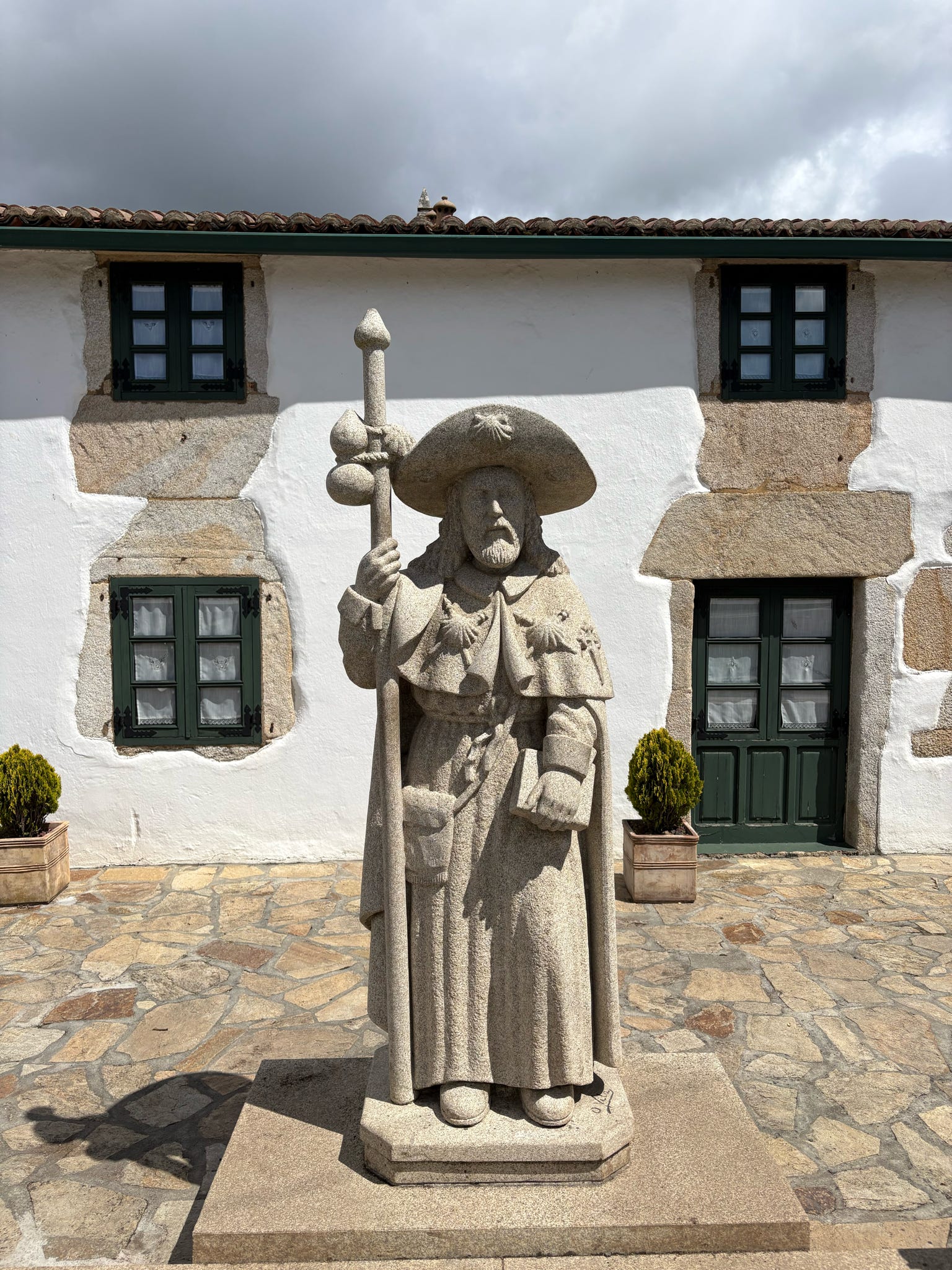
A statue of St. James the Apostle stands with a traditional pilgrim’s walking stick along El Camino. Walking sticks are among the most ubiquitous tools carried by pilgrims today, echoing centuries-old depictions of St. James as a traveler on the sacred route to Santiago de Compostela. Photo courtesy of the Rev. Kris Mares

Rev. Eduardo Bousson
Senior Manager, Collegiate Ministries
The General Board of Higher Education and Ministry
The United Methodist Church
Related Posts

The proposal to unify four general agencies of The United Methodist Church — Discipleship Ministries, Global Ministries (GBGM), Higher Education and Ministry (GBHEM), and United Methodist Communications (UMCom) — to create a new connectional ministries agency has passed its next significant milestone.

I had one of the most beautiful experiences at an Albergue. On El Camino de Santiago there are many opportunities to stop. Albergues are inns, places where people can stop for the night and rest. Some albergues offer different amenities during the day. Some serve as cafes, places where you can have a bite to eat, use the restroom, and refill your water bottle. Most of them would charge a euro to use the restroom. Some would not allow you to use the facilities unless you were a customer.

Facing ongoing global instability, the boards of Higher Education and Ministry and Global Ministries invest in strengthening mission and ministry, prepare for organizational change, and affirm a vision of hope.