Investing in Leadership Excellence at the United Methodist DS-DCM Orientation
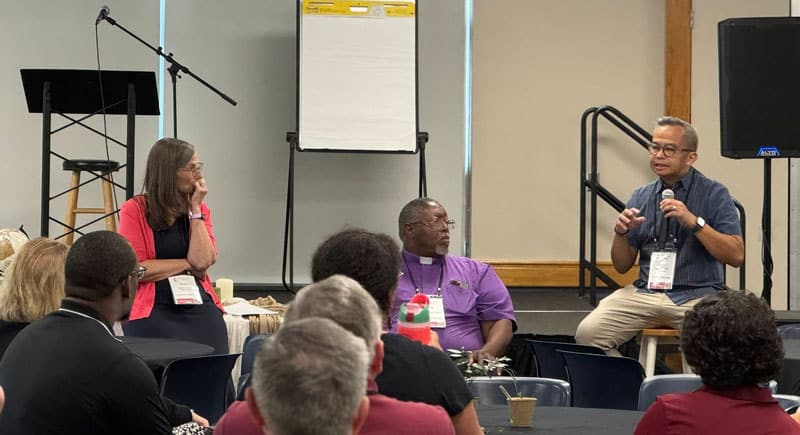
Bishop Sandra Steiner Ball, Bishop Frank Beard, and Bishop Carlo Rapanut are answering questions as part of a panel discussion for new district superintendents. Photo by April Casperson
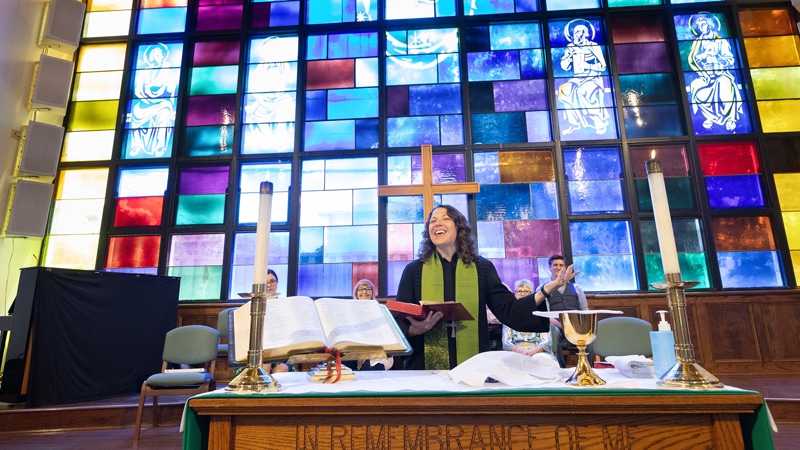
Under the leadership of Bishop Sandra Steiner Ball and a team of bishops, and with support from the General Board of Higher Education and Ministry, the recent United Methodist DS-DCM Orientation on July 27-31 brought together new and existing district superintendents, directors of connectional ministries, and assistants to the bishops for onboarding and training.
Throughout the week, the bishops introduced and reflected on the new vision statement for The United Methodist Church: To Love Boldly, Serve Joyfully, and Lead Courageously.
The orientation offered three separate tracks, designed for each group of attendees:
- Track 1 provided new district superintendents with essential tools for success — best practices for supervision, legal issues and working with district committees on ordained ministry. Through case studies and collaborative problem-solving, the new superintendents strengthened the leadership muscles they’ll use daily, especially in response to recent General Conference changes.
- Track 2 offered returning superintendents a deeper dive into adaptive leadership, emotional intelligence, legal insights, and spiritual formation. With guidance from Bishop Debra Wallace-Padgett and expert facilitators like the Rev. Dr. Blair Thompson, the Rev. April Casperson and others, participants shared best practices and considered how to build resilient and missional teams.
- Track 3 focused on the strength of connectionalism with annual conference leaders and the growth of strong teams across various ministry areas. Bishop Robert C. Schnase and the Rev. Kim Jenne, director of connectional ministries for the Missouri Conference, equipped these leaders with a vision-driven budgeting process to craft a culture of healthy financial stewardship.
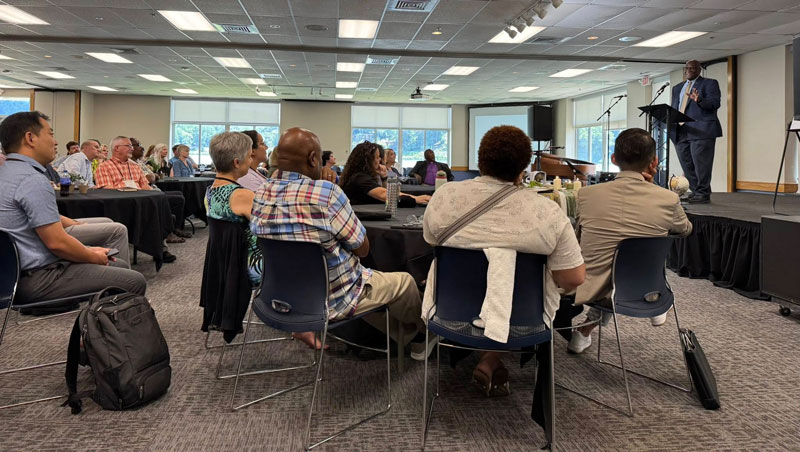
Bishop Gregory Palmer addresses participants at the DS-DCM Orientation on July 27-31. Photo by April Casperson
Related Posts

I had one of the most beautiful experiences at an Albergue. On El Camino de Santiago there are many opportunities to stop. Albergues are inns, places where people can stop for the night and rest. Some albergues offer different amenities during the day. Some serve as cafes, places where you can have a bite to eat, use the restroom, and refill your water bottle. Most of them would charge a euro to use the restroom. Some would not allow you to use the facilities unless you were a customer.

Facing ongoing global instability, the boards of Higher Education and Ministry and Global Ministries invest in strengthening mission and ministry, prepare for organizational change, and affirm a vision of hope.
Methodism has a long history with the concept of perfection. In 18th-century England, perfection or perfectionism was understood the same way it is today. Perfection meant something without error or blemish. John and Charles Wesley, and the early leaders of the Methodist movement, understood perfection differently. In their practice, perfection was related to the Greek term teleio, which conveys maturity, wholeness, and completion.