Black College Fund bolsters Claflin University’s mission and reach
11 schools, 1 calling: How the Black College Fund sustains our HBCUs
By Wendy R. Cromwell
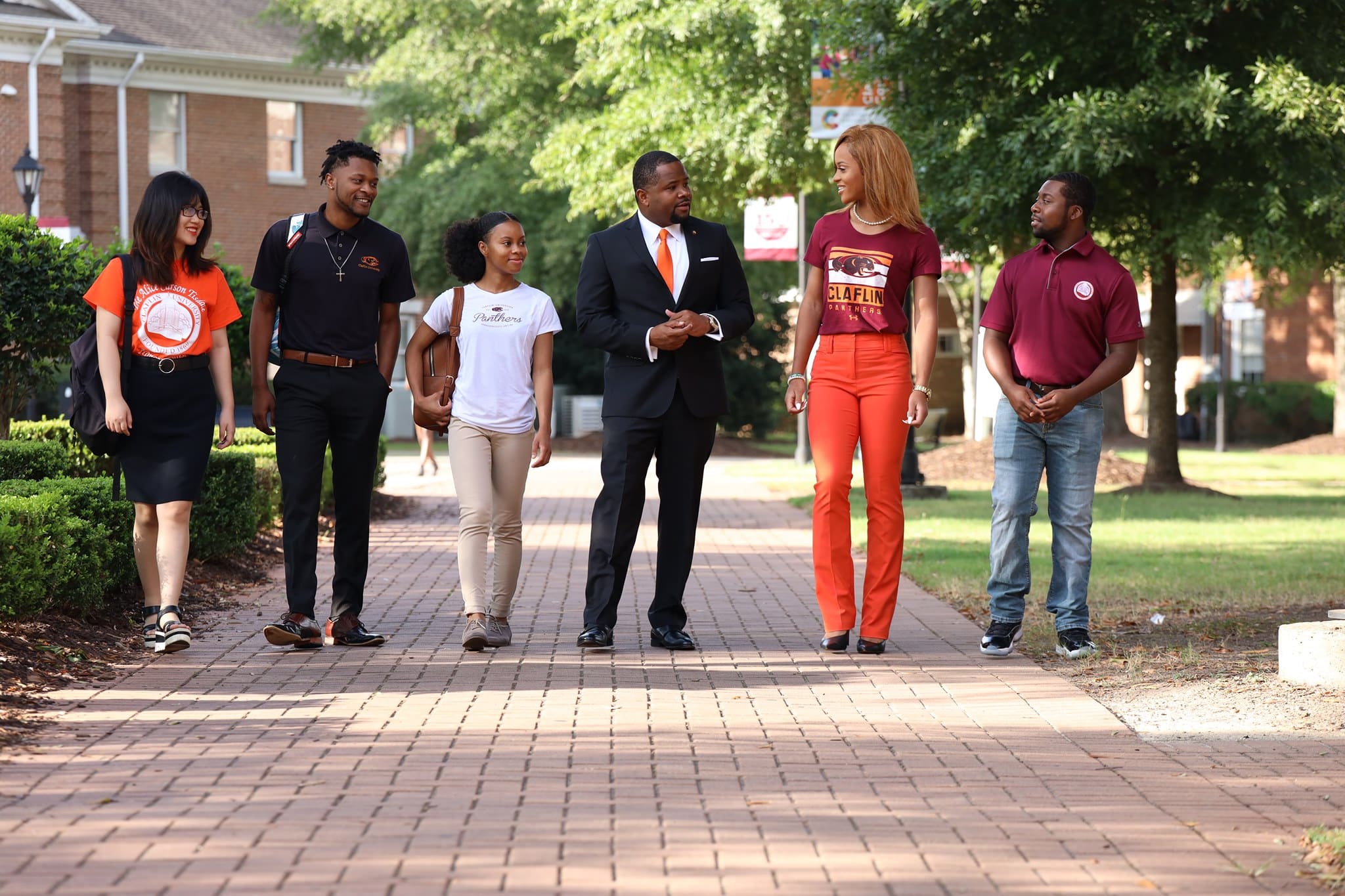
ORANGEBURG, S.C. — At Claflin University, support from the Black College Fund (BCF) and The United Methodist Church (UMC) is a steady presence helping the institution stay rooted in its mission while reaching further into the community.
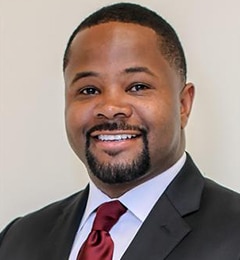
Dr. Dwaun J. Warmack, President of Claflin University
“The BCF grants are truly lifesavers on so many levels — both funding and relational,” said Dr. Dwaun J. Warmack, Claflin’s president. “Without the BCF now more than ever, a critical mass of our institutions (11 UM-related Historically Black Colleges and Universities (HBCUs)) would be in trouble.”
Warmack, in his seventh year leading the university, has overseen major capital improvements supported in part by the fund, including residence hall renovations and infrastructure upgrades. “In 2025, we used our BCF capital funds to update our residence halls,” he said.
With 70 percent of students receiving Pell Grants and half being first-generation college students, Warmack said the church’s support helps Claflin “elevate and transform lives.” Being a UM-related institution also provides relational and connectional support through the General Board of Higher Education and Ministry.
Claflin’s identity as a United Methodist institution is central to its mission. “For 156 years, Claflin has never wavered,” Warmack said. “Being a UMC institution and aligning with its Wesleyan guiding principles — which we do unapologetically — allows us to remain relevant in the current climate and culture.”
The university’s impact extends far beyond its gates. A recent study found Claflin contributes $102 million annually to the local economy and supports more than 1,000 jobs. One of the recent transformational capital projects is its new $44 million student center, includes a first run movie theater, large ballroom/event space and national retail food options.
Claflin’s United Methodist identity is reflected in connectionalism with the Black College Fund. “It serves as a sounding board,” Warmack said. “We presidents can talk with other leaders with similar missions and challenges. We are not in the room alone. The Black College Fund ensures all are at the table in a safe, welcoming space.”
“Our UM identity and support is everything right now,” Warmack said. “We celebrate our Black College Fund support. It bolsters our mission and ongoing commitment to the church.”
About the Black College Fund
The United Methodist Church expands access to quality education through the General Board of Higher Education and Ministry and the Black College Fund, supporting 11 affiliated Historically Black Colleges and Universities. As the largest church-based supporter of HBCUs, the fund provides essential resources for capital improvements, innovative programs, operating expenses, and initiatives that strengthen student success and institutional vitality.
Related Posts

I had one of the most beautiful experiences at an Albergue. On El Camino de Santiago there are many opportunities to stop. Albergues are inns, places where people can stop for the night and rest. Some albergues offer different amenities during the day. Some serve as cafes, places where you can have a bite to eat, use the restroom, and refill your water bottle. Most of them would charge a euro to use the restroom. Some would not allow you to use the facilities unless you were a customer.

Facing ongoing global instability, the boards of Higher Education and Ministry and Global Ministries invest in strengthening mission and ministry, prepare for organizational change, and affirm a vision of hope.
Methodism has a long history with the concept of perfection. In 18th-century England, perfection or perfectionism was understood the same way it is today. Perfection meant something without error or blemish. John and Charles Wesley, and the early leaders of the Methodist movement, understood perfection differently. In their practice, perfection was related to the Greek term teleio, which conveys maturity, wholeness, and completion.