Grants Announced to Address Food Insecurity at United Methodist-Related Schools

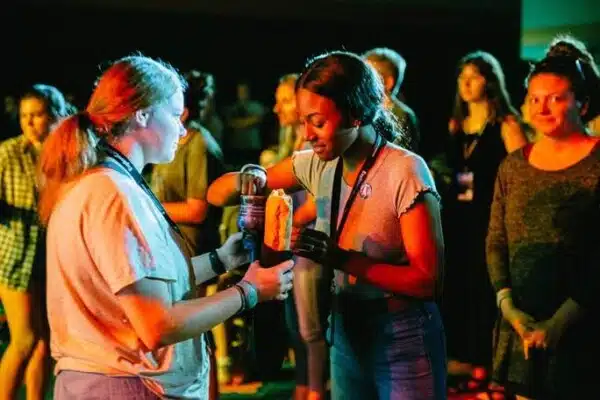
A total of 20 $10,000 Campus Food and Hygiene Insecurity Grants will be available to institutions with fewer than 1,500 students to strengthen their campus food pantries and related services. (Photo by Jacob McGowin on Unsplash)
ATLANTA, May 21, 2026 – As students face mounting financial pressures from cuts in student support programs on U.S. university campuses, the General Boards of Higher Education and Ministry and Global Ministries will offer campus food and hygiene insecurity grants for United Methodist-related colleges to help provide food and essential supplies to their students.
A total of 20 $10,000 Campus Food and Hygiene Insecurity Grants will be available to institutions with fewer than 1,500 students to strengthen their campus food pantries and related services. Applications will open on June 1 and close on August 31. Grant information will be sent directly to campus ministers and campus contacts.
According to an analysis of student data by the U.S. General Accounting Office, an estimated 23 percent of college students, 3.8 million, experienced food insecurity in 2020. Since then, U.S. higher education institutions have experienced financial strain from reduced federal funding, leading to cuts in student support programs. Declining loans and scholarships are increasing financial pressure on students, forcing difficult choices around tuition and basic living expenses.
“At a time when many students are struggling to meet even their most basic needs, the church is called to respond with compassion and action,” said Roland Fernandes, general secretary of Global Ministries and Higher Education and Ministry. “These grants are a tangible expression of our commitment to ensure that students can pursue their education with dignity, without having to choose between their studies and essential necessities like food and hygiene.”
Dr. Dana Lyles, executive director of Multiethnic Ministries for Global Ministries and Higher Education and Ministry added, “Food insecurity doesn’t just affect a student’s health — it affects their ability to learn, to lead, and to stay enrolled. By strengthening campus pantries and support services, these grants help our schools create communities where every student is seen, supported, and able to thrive.”
Global Ministries provided similar grants in 2023 for students at nine United Methodist-related schools by purchasing items including hygiene products, laundry supplies, and food pantry needs.
About Global Ministries
The General Board of Global Ministries, which includes the work of the United Methodist Committee on Relief (UMCOR), is the international mission, humanitarian relief and development organization of The United Methodist Church. Global Ministries connects the church in mission and alleviates human suffering to spread God’s love and Christ’s caring presence. Global Ministries works in more than 100 countries, often through partners, to send missionaries, strengthen churches, improve community health, care for the environment and provide disaster response and humanitarian relief.
About Higher Education and Ministry
The General Board of Higher Education and Ministry (GBHEM) is the leadership development agency of The United Methodist Church. GBHEM nurtures Christian leaders by awarding scholarships, supporting United Methodist–related colleges and universities and theological schools, resourcing discernment and candidacy for ordained ministry, and equipping faith leaders to serve a global church and world. Through its work, GBHEM helps shape leaders who are rooted in faith, committed to justice, and prepared for ministry in diverse contexts.
Media Contact
Susan Clark
Chief Communications Officer, General Boards of Global Ministries and Higher Education and Ministry
Communications@umcmission.org
Related Posts

When I talk to young people about peacemaking, I hear their cynicism. They’ve told me, “Why bother?” They seem to think no one is trying.

The proposal to unify four general agencies of The United Methodist Church — Discipleship Ministries, Global Ministries (GBGM), Higher Education and Ministry (GBHEM), and United Methodist Communications (UMCom) — to create a new connectional ministries agency has passed its next significant milestone.

I had one of the most beautiful experiences at an Albergue. On El Camino de Santiago there are many opportunities to stop. Albergues are inns, places where people can stop for the night and rest. Some albergues offer different amenities during the day. Some serve as cafes, places where you can have a bite to eat, use the restroom, and refill your water bottle. Most of them would charge a euro to use the restroom. Some would not allow you to use the facilities unless you were a customer.