

When Paul writes to the Philippians, he is aware that his life is unfinished. He knows he still has more to accomplish. He is driven by his mission and his love for others. I know an unfinished life is not the same as an abridged one. They have in common that they are not complete, that there is more to do.

The University Senate of The United Methodist Church has approved a new Framework for United Methodist Formation, establishing a more comprehensive and flexible approach to preparing United Methodist candidates for ministry at approved non-United Methodist theological schools.

When I talk to young people about peacemaking, I hear their cynicism. They’ve told me, “Why bother?” They seem to think no one is trying.

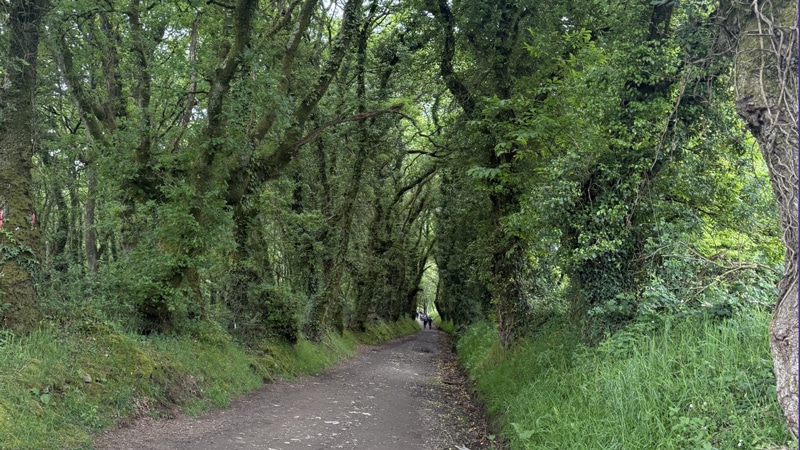
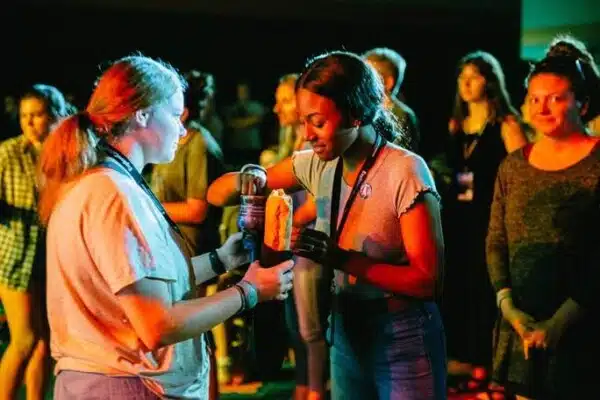
I had one of the most beautiful experiences at an Albergue. On El Camino de Santiago there are many opportunities to stop. Albergues are inns, places where people can stop for the night and rest. Some albergues offer different amenities during the day. Some serve as cafes, places where you can have a bite to eat, use the restroom, and refill your water bottle. Most of them would charge a euro to use the restroom. Some would not allow you to use the facilities unless you were a customer.
Methodism has a long history with the concept of perfection. In 18th-century England, perfection or perfectionism was understood the same way it is today. Perfection meant something without error or blemish. John and Charles Wesley, and the early leaders of the Methodist movement, understood perfection differently. In their practice, perfection was related to the Greek term teleio, which conveys maturity, wholeness, and completion.
To commemorate this National Hispanic Heritage Month, I share with you parts of a poem by Julia de Burgos. She was a Puerto Rican poet, lauded as one of the most important poets of her time. The poem is an ode to setting our own path, even if this means breaking with old patterns and expectations. Following this vocation is a way to find peace in life.
Adopting mannerisms, values, and practices is a form of incarnation. Incarnation is being in someone else’s flesh. In the Christian tradition, when we speak of the Incarnation, we speak of the mystery of God becoming like one of us.
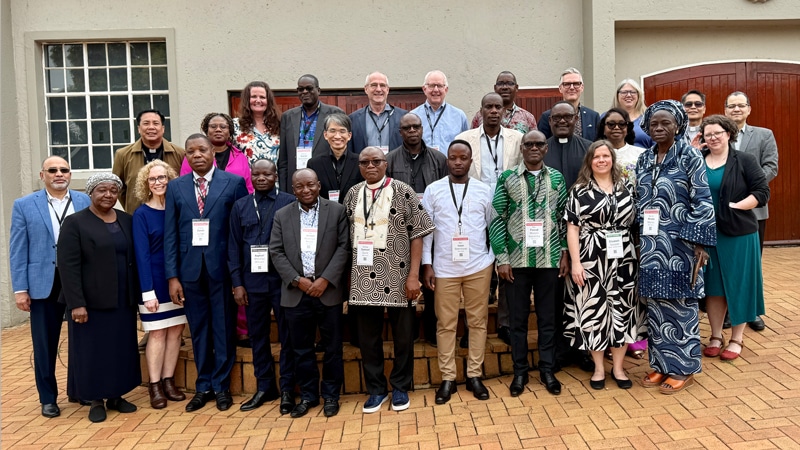
The Central Conference Theological Education Fund (CCTEF) awarded $992,594 in grants to support theological education across The United Methodist Church. During its spring 2026 meeting in Johannesburg, South Africa, commissioners reviewed $3.9 million in funding requests and made awards from a total allocation of $1.03 million. The final grant list was released in August.

Kathleen Norris writes about her students’ reflections on silence. Silence is sometimes scary. To hold silence is to let go of control. Sometimes we do not know what will follow after silence

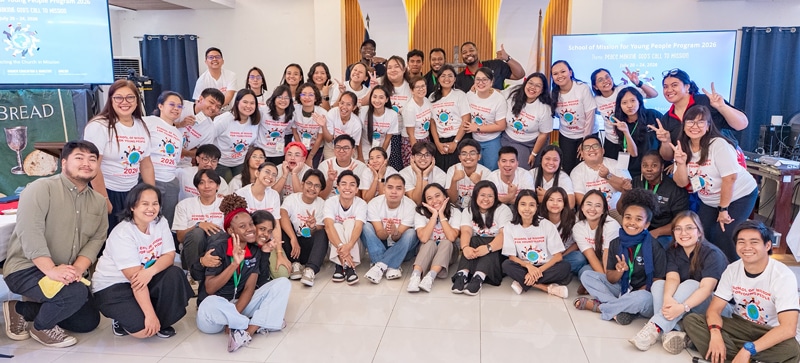
The School of Mission for Young People (SMYP) brought together more than 30 leaders in the UMC to engage in conversations and experiences around mission in Asia.









Nurturing Leaders. Changing Lives.

The General Board of Higher Education and Ministry of The United Methodist Church, Inc. works with people and partners around the world to connect the church and the academy and prepare transformative leaders for the church and the world.
Copyright © 2026 General Board of Higher Education and Ministry. All Rights Reserved.
Keep in touch
Street Address:
1908 Grand Ave.
Nashville, TN 37212
Mailing Address:
P.O. Box 340007
Nashville, TN 37203-0007