Wiley University uses Black College Funds to Help Break Cycles and Build Opportunity
11 Schools, 1 Calling: How the Black College Fund Sustains Our HBCUs
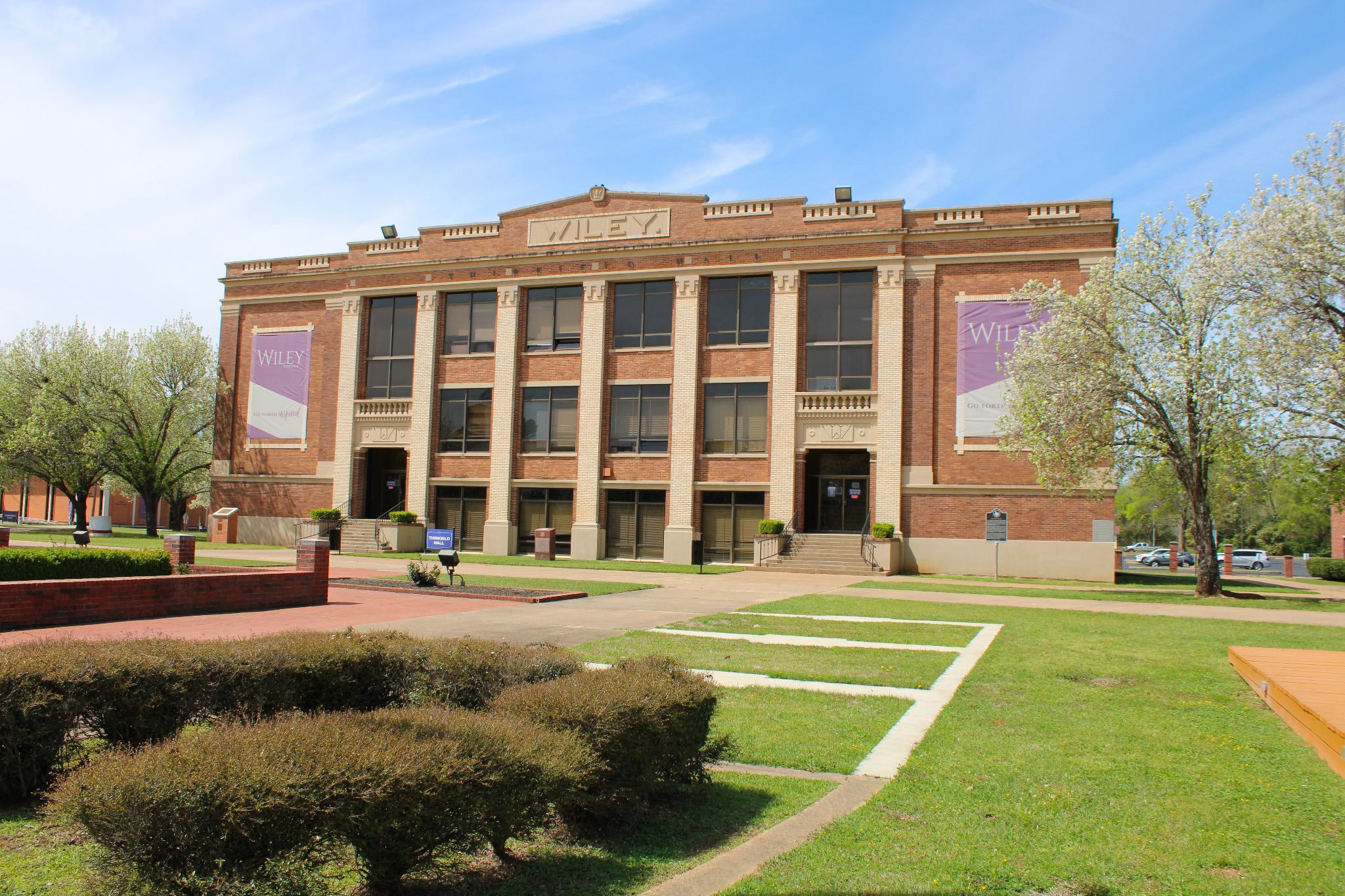
“The support we receive is often the difference between changing the trajectory of families and seeing cycles of poverty persist,” Dr. Herman Felton Jr. said. (Photo courtesy of Wiley University)
By Wendy R. Cromwell
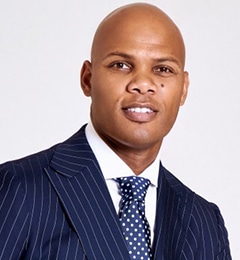
Dr. Herman Felton Jr., president of Wiley University
MARSHALL, Texas — The United Methodist Church’s Black College Fund has made an “indelible footprint” on Wiley University, providing steadfast support that President Dr. Herman Felton Jr. says continues to drive student success, modernize the 151‑year‑old campus, and strengthen the institution’s long‑term stability.
“The support we receive is often the difference between changing the trajectory of families and seeing cycles of poverty persist,” Felton said.
Located in Marshall, Texas, once known for one of the state’s highest lynching rates, Wiley has become “a place where hope, opportunity and access thrive,” Felton said.
The Black College Fund has helped upgrade classrooms with new technology, expand athletic facilities, and establish a Center for Excellence in Teaching and Learning. One initiative, providing every student with an iPad, led to a 9 percent retention increase in just one semester. “These kinds of investments allow our students, faculty and staff to operate in a world driven by technology and AI,” Felton said.
The university has used BCF dollars to support school scholarships “separate and apart from what the expected scholarships are,” widening access for students who want to attend the historically Black university.
Felton finds deep alignment with Wesleyan values. “The Wesleyan principles can be adapted and practiced by anyone,” he said. “That alignment with my personal ethos is something I’m most proud of.”
He also spoke candidly about ongoing attacks on diversity, equity and inclusion efforts, calling them “misguided” and “ill‑founded.” The work, he added, simply ensures people are seen as “capable, competent and worthy of access.”
Looking ahead, Wiley plans to launch an executive Ph.D. program aimed at strengthening both spiritual and economic leadership in communities. Increasing persistence and retention, “the work that is not so glamorous,” remains a top priority.
Felton’s vision for Wiley centers on producing whole, responsible human beings. “If you’re producing mediocre, marginalized human beings… it doesn’t matter how phenomenal of an engineer or doctor they are.”
About the Black College Fund
The United Methodist Church expands access to quality education through the General Board of Higher Education and Ministry and the Black College Fund, supporting 11 affiliated Historically Black Colleges and Universities. As the largest church-based supporter of HBCUs, the fund provides essential resources for capital improvements, innovative programs, operating expenses, and initiatives that strengthen student success and institutional vitality.
Related Posts

When I talk to young people about peacemaking, I hear their cynicism. They’ve told me, “Why bother?” They seem to think no one is trying.

The proposal to unify four general agencies of The United Methodist Church — Discipleship Ministries, Global Ministries (GBGM), Higher Education and Ministry (GBHEM), and United Methodist Communications (UMCom) — to create a new connectional ministries agency has passed its next significant milestone.

I had one of the most beautiful experiences at an Albergue. On El Camino de Santiago there are many opportunities to stop. Albergues are inns, places where people can stop for the night and rest. Some albergues offer different amenities during the day. Some serve as cafes, places where you can have a bite to eat, use the restroom, and refill your water bottle. Most of them would charge a euro to use the restroom. Some would not allow you to use the facilities unless you were a customer.