University Senate Updates List of Non-United Methodist Theological Schools
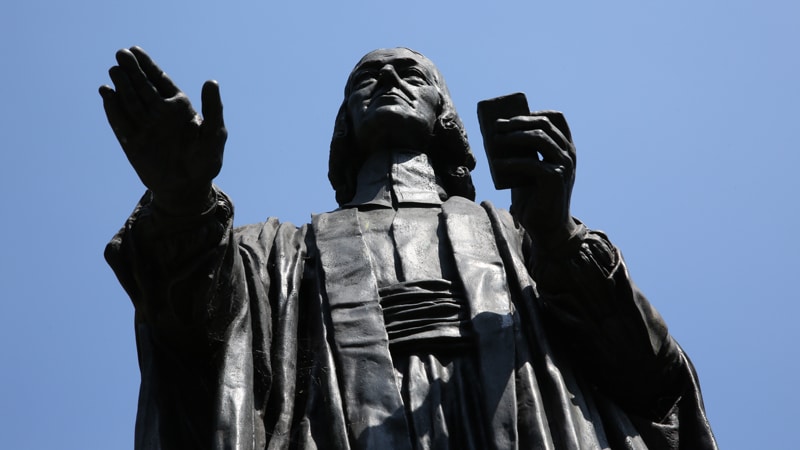
A London statue of John Wesley stands as a symbol of United Methodist heritage, underscoring the importance of theological education aligned with the church’s doctrine and mission. (Photo courtesy of Kathleen Barry, UMNews)
General Secretary Roland Fernandes Affirms Decision to Ensure Alignment with UMC Standards in Theological Education
During its June meeting, the University Senate of The United Methodist Church updated the list of approved non-United Methodist theological schools, based on University Senate requirements for preparing candidates for ordination in The United Methodist Church. This update included the removal of Asbury Theological Seminary and Northeastern Seminary from the list of approved non-United Methodist schools.
The decision to delist both institutions followed findings from their respective quadrennial reviews. Following the reviews, the University Senate’s Commission on Theological Education (CTE) scheduled and hosted direct dialogues with each school’s institutional leadership. University Senate Guidelines call for reviews to include assessment of four areas: program quality, governance, institutional integrity, and church relatedness. The decision to remove a school reflects the Senate’s responsibility to apply existing standards faithfully and consistently, not a change in policy.
The University Senate’s Commission on Theological Education determined that Asbury’s published ethos statement is not compatible with the Social Principles of The United Methodist Church. In addition, Asbury does not have a full-time United Methodist faculty member who consistently teaches required United Methodist history, doctrine, and polity.
Northeastern also does not have a United Methodist faculty member, and its programs are offered primarily online, without a residential and formational experience required by the University Senate Guidelines.
The quadrennial review process exists to help ensure, among other things, that candidates for ministry are formed in settings clearly aligned with United Methodist ethos and provide regular, substantive instruction in United Methodist history, doctrine, and polity.
In a recent review cycle, the University Senate received formal notifications from both Palmer Theological Seminary and Luther Seminary, declining participation in their quadrennial reviews and requesting removal from the listing of approved, non-United Methodist theological schools.
We are mindful that decisions such as these affect students, schools, annual conferences, and the wider church. United Methodist students at the institutions named above, who are currently enrolled or plan to matriculate in fall 2026, will be permitted to complete their programs without interruption and pursue ordination in The United Methodist Church. After fall 2026, United Methodist students beginning coursework for the purpose of pursuing ordination in The United Methodist Church must explore Senate-approved theological schools.
The University Senate gives thanks for the long history and contributions of these institutions to theological education and to the life of The United Methodist Church.
Grace and peace,
Roland Fernandes
General Secretary, Higher Education and Ministry
Related Posts

When Paul writes to the Philippians, he is aware that his life is unfinished. He knows he still has more to accomplish. He is driven by his mission and his love for others. I know an unfinished life is not the same as an abridged one. They have in common that they are not complete, that there is more to do.

The University Senate of The United Methodist Church has approved a new Framework for United Methodist Formation, establishing a more comprehensive and flexible approach to preparing United Methodist candidates for ministry at approved non-United Methodist theological schools.

As of late September 2026, This Moment Matters has disbursed $38.6 million across 681 grants in the areas of agriculture and food security, education, health, migration, and peace.