Rev. Dr. Margaret Ann Crain: A Life of Service as a Deacon
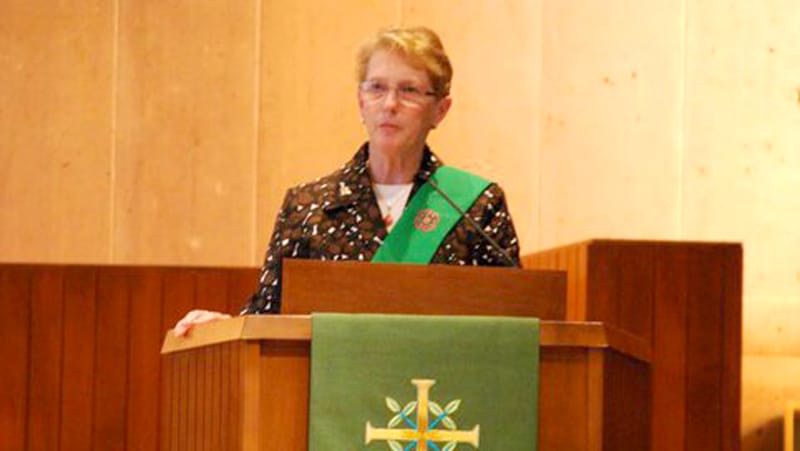
“What we need are deacons out there trying to change the world everywhere,” said Rev. Dr. Margaret Ann Crain, a member of the founding class of the Order of Deacons. Photo Courtesy of Rev. Dr. Crain
By Wendy R. Cromwell
The Rev. Dr. Margaret Ann Crain helped define what it means to be a deacon, even before The United Methodist Church had the language.
Crain, now among the first class of United Methodist deacons ordained following the 1996 General Conference, said her sense of call long predated the creation of the Order of Deacon.
“I felt like I was kind of neither fish nor fowl in the church,” she said of her years as a consecrated diaconal minister, beginning in 1986. “I really always identified more like a clergy person.”
When the denomination established the order in 1996, Crain said the moment did not change her calling—it affirmed it.
“It wasn’t going to mean much of a change in my sense of who I was,” she said. “Though the church would count me differently.”
Over the next three decades, Crain helped shape the theology, identity, and formation of deacons through her ministry and her work as a professor and director of deacon studies at Garrett Seminary. Central to that identity, she said, are four words: word, service, compassion, and justice.
“It’s not enough to just do charity,” Crain said. “We must always work toward justice.”
For Crain, the deacon’s role is defined not by where they serve, but by how they serve, with an outward focus that connects the church to the world.
“The identity of the deacon must always remain focused outward,” she said. “Everything I did needed to be focused on equipping the church … for the work of compassion and justice in the world.”
That outward focus, she believes, is essential for the future of the church itself.
“What we need are deacons out there trying to change the world everywhere,” Crain said.
Throughout her career, Crain has also been a strong advocate for recognizing the full authority and trust of deacons, including the recent decision allowing them to preside at the sacraments of baptism and Holy Communion without special approval.
“We don’t need to be rationing the grace of God to the world,” she said. “There’s plenty. It’s not scarce.”
Even as the role continues to evolve, Crain said one thing remains constant: clarity of identity.
“Just remember who you are,” she said. “Hang on to that identity — what God’s called you to.
Bridging Church and World
Through diverse ministries and shared purpose, meet six deacons who embody a calling rooted in Word, service, compassion, and justice. Their stories in the coming weeks mark the 30th anniversary of the Order of Deacons and its enduring mission to build bridges of hope.
Related Posts

Methodism has a long history with the concept of perfection. In 18th-century England, perfection or perfectionism was understood the same way it is today. Perfection meant something without error or blemish. John and Charles Wesley, and the early leaders of the Methodist movement, understood perfection differently. In their practice, perfection was related to the Greek term teleio, which conveys maturity, wholeness, and completion.
Sometimes, the road to Damascus passes through Breezewood, Pennsylvania. There at the intersection of Interstates 70 and 76, the Rev. Bruce Maxwell, a United Methodist deacon who serves as an endorsed chaplain at the travel plaza, cares for truckers, travelers, or anyone passing through.
The EXPLORATION discernment event is unlike any other event with its goal of helping people discern and not pushing them into ordained ministry or into a particular form of Christian service. EXPLORATION helps participants discern and be open to what God may be asking of them and how they are called to use their gifts and graces to make disciples of Jesus Christ for the transformation of the world.