Meharry Medical College: Faith and Funding Fuel Health Equity
11 Schools, 1 Calling: How the Black College Fund Sustains Our HBCUs
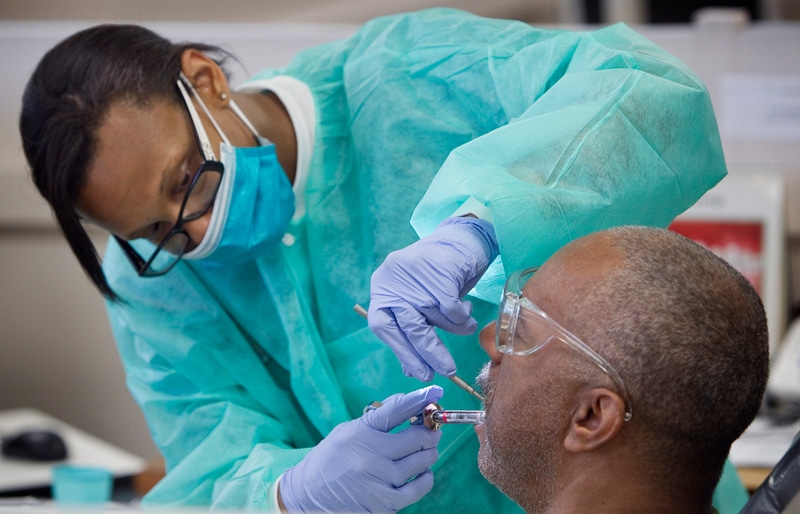
An example is a 65-foot mobile dental clinic funded through BCF dollars. The unit travels to rural Tennessee communities with no dentists, providing cleanings, fillings, and extractions. “This is one way we serve our communities,” Dr. James Hildreth said. “We go out into them with medical services.” (Photo by Mike DuBose, UMNews)
By Wendy R. Cromwell
NASHVILLE, Tenn. — “Meharry [Medical College] was birthed, reared in and now sustained by our faith. Methodists came together to create something special,” said Dr. James Hildreth, president and CEO of Meharry. “It allows our students to worship God through service.”
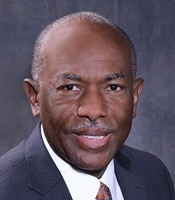
Dr. James Hildreth, president and CEO of Meharry Medical College
That spirit of faith and service is at the heart of Meharry’s mission — and its impact is undeniable. Eighty percent of Meharry alumni serve in underserved communities, continuing a legacy that began nearly 150 years ago.
Founded in 1876 by members of the Methodist Episcopal Church, Meharry was the first Historically Black College and University (HBCU) in central Tennessee and the first with a medical department. Today, the college remains committed to advancing health equity through research, education, and care for those most in need.
For Hildreth, the connection between faith, The United Methodist Church, and education became clear soon after he arrived in 2015. “Within months, I learned about the importance of the church, the Black College Fund (BCF), the General Board of Higher Education and Ministry (GBHEM), and apportionment giving,” he said. “The church through the Black College Fund is one of our largest donors. Through the years, it has donated millions of dollars to support our students.”
That support is vital. “The BCF support is invaluable,” Hildreth said. “Its steady support is tremendous. We have the flexibility of using it for operational gaps or scholarships for our students.”
An example is a 65-foot mobile dental clinic funded through BCF dollars. The unit travels to rural Tennessee communities with no dentists, providing cleanings, fillings, and extractions. “This is one way we serve our communities,” Hildreth said. “We go out into them with medical services.”
BCF funds have also helped create a lecture hall for Meharry’s new physician assistant program and a digital donor wall to celebrate supporters. These investments matter as Meharry faces challenges, including federal funding cuts and rising student debt. Medical students graduate with an average of $280,000 in loans.
“Our students come from disadvantaged backgrounds but show resilience and faith,” Hildreth said. “Every dollar we get, we put it to use and ensure we train health care workers. By changing their lives, we are touching the future.”
About the Black College Fund
The United Methodist Church expands access to quality education through the General Board of Higher Education and Ministry and the Black College Fund, supporting 11 affiliated Historically Black Colleges and Universities. As the largest church-based supporter of HBCUs, the fund provides essential resources for capital improvements, innovative programs, operating expenses, and initiatives that strengthen student success and institutional vitality.
Related Posts

When I talk to young people about peacemaking, I hear their cynicism. They’ve told me, “Why bother?” They seem to think no one is trying.

The proposal to unify four general agencies of The United Methodist Church — Discipleship Ministries, Global Ministries (GBGM), Higher Education and Ministry (GBHEM), and United Methodist Communications (UMCom) — to create a new connectional ministries agency has passed its next significant milestone.

I had one of the most beautiful experiences at an Albergue. On El Camino de Santiago there are many opportunities to stop. Albergues are inns, places where people can stop for the night and rest. Some albergues offer different amenities during the day. Some serve as cafes, places where you can have a bite to eat, use the restroom, and refill your water bottle. Most of them would charge a euro to use the restroom. Some would not allow you to use the facilities unless you were a customer.