Police Chaplain Kimberly Davis Serves Those Who Serve in Chicago
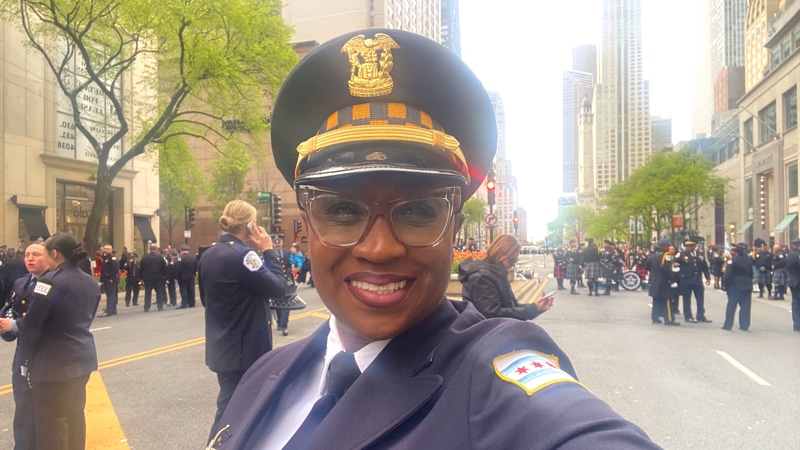
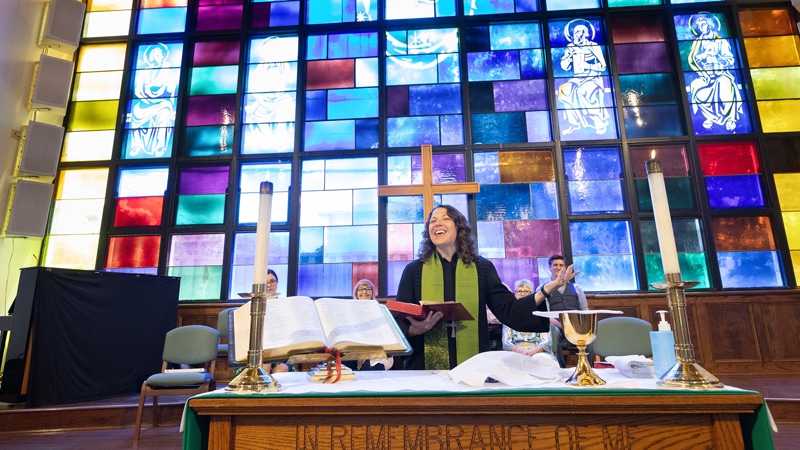
“I help them (police officers) create space and be vulnerable to what God is saying. I help them feel the strength of God in those moments of weakness — the miracles, signs, and wonders — that’s when ministry comes alive,” said Police Chaplain Rev. Kimberly Davis. (Photo Courtesy of Kimberly Davis)
By Rev. Benjamin Perry
Carefully laid plans don’t always align with God’s timing. For Police Chaplain Rev. Dr. Kimberly Davis, the call to ministry came when she was serving as a police officer. Although she grew up in the church and participated in young adult programming, she still felt the Spirit pulling her to deepen that connection.
However, working full time, the logistical challenges felt unsurmountable and the educational and ecclesial requirements too steep. “I said, ‘Okay, God, I’ll apply to one seminary,’” Davis recalled. “Then, I was accepted and discovered two things about the Chicago Police Department. My hours could be adjusted to enable going back to school, and the department paid for continuing education through tuition reimbursement. God took all the excuses away.”
After earning her Master of Divinity in 2013 and pursuing ordination as a deacon in The United Methodist Church, Davis accepted a role as a chaplain with the police department — an opportunity to unite her professional experience with a growing call to ministry. “Now, I can serve those I work with in the way that I would serve a parish,” she said.
“We do a Christian fellowship worship every Wednesday and Friday,” she said. “I develop relationships with officers, officiate weddings and funerals, offer devotionals or guidance from the Bible when someone is struggling.”
And, when an officer dies in the line of duty, she brings God’s love and presence amid that overwhelming grief. It’s a call that fulfills The United Methodist Church’s mission by bringing love and care beyond the bounds of its churches.
“We have to get outside the walls of the church,” Davis said. “Connecting with people in a real way doesn’t always bring them to the church, but it introduces them to Christ.” For police officers, whose jobs require a degree of guardedness, strength, and fortitude, it’s a chance to let those defenses down.
“I help them create space and be vulnerable to what God is saying,” she said. “I help them feel the strength of God in those moments of weakness — the miracles, signs, and wonders — that’s when ministry comes alive.”
Public sector chaplaincy provides opportunities for people who feel called to ministry outside the parish. “Ministry, for so many of us, looks different now — it’s not always the brick-and-mortar church,” she said. “It’s okay to say, ‘that’s not where I’m meant to serve,’ and carve a new way.”
It can mean thinking creatively about how to develop connections within public service — nurturing relationships and listening for ministry opportunities to arise, she said. “Look for opportunities to volunteer, to serve, or to donate,” Davis said. “Find big days on the calendar for that sector or jurisdiction and show up with something. That’s an opportunity to gain traction and build relationships.”
While the road into this form of ministry isn’t straightforward, the work is rewarding. “I love it from A to Z,” Davis said. “I’m so grateful that God provided a way to integrate my work and my ministries. It’s an amazing ride, serving people who are not just friends, but who live and work as an extended family.”
The Rev. Benjamin Perry is the associate vice president for communications at Garrett Seminary in Evanston, Illinois, and is author of Cry, Baby: Why Our Tears Matter.
Related Posts

I had one of the most beautiful experiences at an Albergue. On El Camino de Santiago there are many opportunities to stop. Albergues are inns, places where people can stop for the night and rest. Some albergues offer different amenities during the day. Some serve as cafes, places where you can have a bite to eat, use the restroom, and refill your water bottle. Most of them would charge a euro to use the restroom. Some would not allow you to use the facilities unless you were a customer.

Facing ongoing global instability, the boards of Higher Education and Ministry and Global Ministries invest in strengthening mission and ministry, prepare for organizational change, and affirm a vision of hope.
Methodism has a long history with the concept of perfection. In 18th-century England, perfection or perfectionism was understood the same way it is today. Perfection meant something without error or blemish. John and Charles Wesley, and the early leaders of the Methodist movement, understood perfection differently. In their practice, perfection was related to the Greek term teleio, which conveys maturity, wholeness, and completion.