Reflections for Lent 2026: What We Love
A Lenten Reflection Series
By Rev. Eric Doolittle, American University
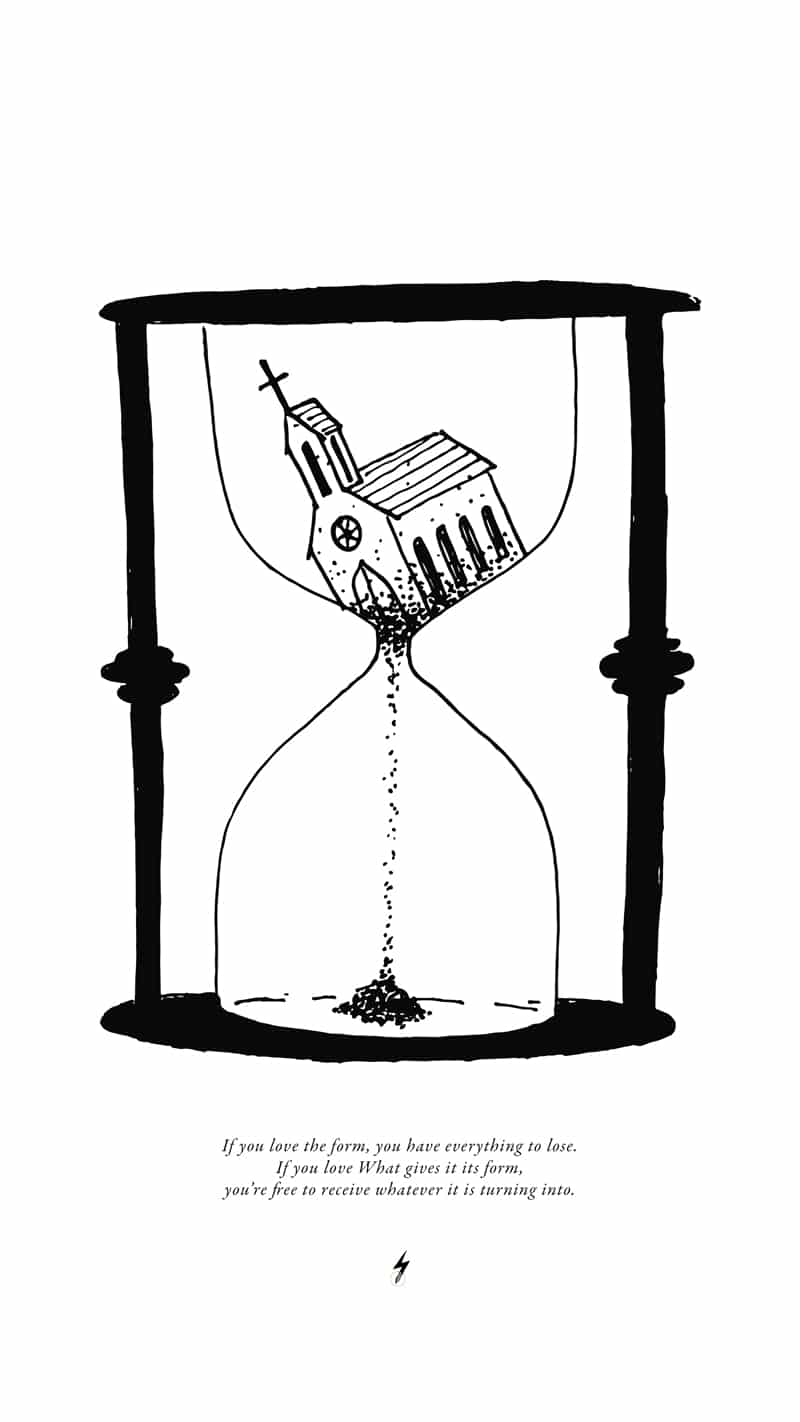
About seven years ago, a colleague and friend gave me a Scott Erickson print called “It Changes With Time.” It depicts a prototypical white country church suspended in the sand of an hourglass, slowly sinking with only sand and ashes below. I had long been a fan of Scott’s work and recommend his writings and art frequently. But I did not like this one. It seemed like an attack on the church, especially the small rural churches that I had served in East Tennessee before transitioning to campus ministry. I still hung the print in my office, more out of obligation than desire. Every time I looked at it, it stirred something in me – something uncomfortable that I kept avoiding.
Then the COVID pandemic hit and everything about ministry changed. Like so many folks, we tried to pivot to online worship, to social media devotionals, and Zoom call Bible studies. It was messy, hard, and not always successful. One anchor point in that time was my ability to slip into our beautiful historic chapel to film content and find time to feel that God was still present when I felt so alone. But the empty chapel, even with its richly worn wooden pews and jewelry-box stained-glass windows, eventually felt too still, too quiet, and too frozen in time.
Over two years of social distancing and finding alternative ways to “do” church, I became more comfortable with some of these new ways to connect. I still lean heavily into using social media, video streaming, and online tools to help connect people to God and one another. When I finally got back into my office full time, the dissolving country church was still there. As I reread the quote below took on new meaning. It reads,
If you love the form, you have everything to lose.
If you love What gives it form,
you’re free to receive whatever it is turning into.
I still love the beautiful space and places where God’s presence has seemed so real to me – little country churches, giant cathedrals, and cozy chapels. But now I am reminded that those places are designed to reflect and amplify that presence, they do not create it. Nor can they fully contain it. Those holy spaces are so special because we gather there as the Body of Christ. As the Beloved Community. And the Divine joins us in those places because that is where we are and we invite the Spirit to be revealed, not because God just hangs out in those paces waiting for us to show up.
Now, in a new office and new setting, that Scott Erickson print hangs proudly. You’ll see it just over my shoulder on Zoom calls, reminding me that What I love is God and God’s people coming together, wherever and however we may do so.
If you love the form, you have everything to lose.
If you love What gives it form,
you’re free to receive whatever it is turning into.— Scott Erickson
Related Posts

As of late September 2026, This Moment Matters has disbursed $38.6 million across 681 grants in the areas of agriculture and food security, education, health, migration, and peace.

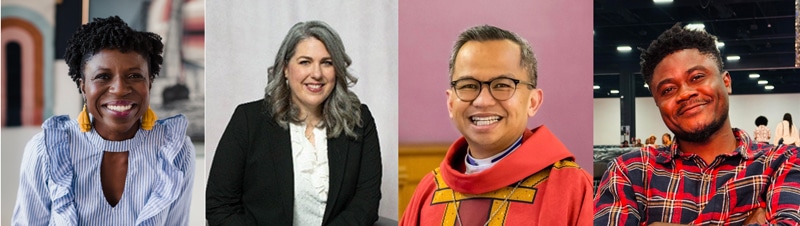
A diverse group of church leaders will help guide worship and reflection at EXPLORATION 2026, Nov. 6-8 in Orlando, Florida. Participants will hear from the Rev. Lisa Yebuah, the Rev. Dr. Ashlee Alley Crawford, Bishop Carlo A. Rapanut, and the Rev. Albarka Abbo Wakili, whose ministries span church planting, discipleship, episcopal leadership, and global mission.
When I talk to young people about peacemaking, I hear their cynicism. They’ve told me, “Why bother?” They seem to think no one is trying.