From Stability to Innovation: How the Black College Fund Propels Clark Atlanta Forward
11 schools, 1 calling: How the Black College Fund sustains our HBCUs
By Wendy R. Cromwell
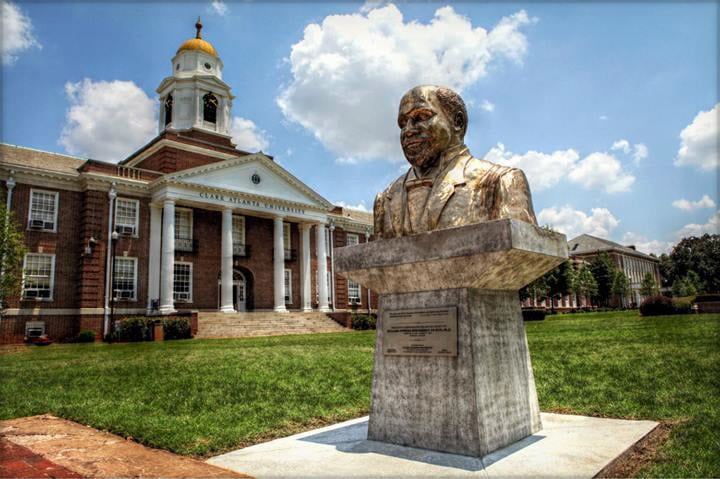
ATLANTA — As political pressures mount around higher education, Clark Atlanta University, one of the 11 Historically Black Colleges and Universities (HBCUs) connected with The United Methodist Church, is pushing forward with clarity and conviction. The university, aided by the church’s Black College Fund, is channeling its legacy into a future defined by research, innovation, and student empowerment.
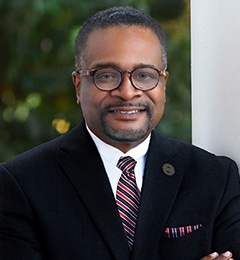
Dr. George T. French, president of Clark Atlanta University
President Dr. George T. French calls the Black College Fund nothing short of essential for the institution, founded through the historic consolidation of Atlanta University (1865) and Clark College (1869).
“It provides the consistent operational support needed to stabilize the institution in an era when many universities face unpredictability,” Dr. French said. “This support ensures our schools can meet payroll, retain talent, and focus on long-term strategic planning — not crisis management.”
That stability is vital as Clark Atlanta strengthens its standing as an R2 research institution, a federal classification for universities with high research activity.
The university is investing in research centers, including work in prostate cancer and genomic therapeutics.
“These are fields that disproportionately affect Black communities,” Dr. French said, adding these expansions are part of a broader strategy to deepen the university’s research portfolio and build toward even greater national competitiveness.
The push toward expanded research capacity reflects both urgency and opportunity. “Today’s students live in an unpredictable world shaped by economic strain, climate disruptions, and cultural polarization,” Dr. French said. Many come from households where attending college requires sacrifice.
The Black College Fund helps Clark Atlanta provide the academic support, faculty excellence, and campus safety nets students need to thrive academically and personally, Dr, French said, highlighting the work of the university’s chaplain, Rev. Tanya Miles, who witnesses daily how critical that support is.
“Whether addressing weather related emergencies or offering spiritual guidance, her team helps maintain a sense of belonging and stability,” Dr. French said. “She calls the campus a home, and the Black College Fund helps sustain it.”
In a political climate where the value of historically Black institutions is continually debated, Dr. French said Clark Atlanta remains firm in its mission. The Black College Fund, through the General Board of Higher Education and Ministry, helps ensures the university can continue educating students, and shaping leaders, researchers, and thinkers for generations to come on the historic campus.
About the Black College Fund
The United Methodist Church expands access to quality education through the General Board of Higher Education and Ministry and the Black College Fund, supporting 11 affiliated Historically Black Colleges and Universities. As the largest church-based supporter of HBCUs, the fund provides essential resources for capital improvements, innovative programs, operating expenses, and initiatives that strengthen student success and institutional vitality.
Related Posts

As of late September 2026, This Moment Matters has disbursed $38.6 million across 681 grants in the areas of agriculture and food security, education, health, migration, and peace.

A diverse group of church leaders will help guide worship and reflection at EXPLORATION 2026, Nov. 6-8 in Orlando, Florida. Participants will hear from the Rev. Lisa Yebuah, the Rev. Dr. Ashlee Alley Crawford, Bishop Carlo A. Rapanut, and the Rev. Albarka Abbo Wakili, whose ministries span church planting, discipleship, episcopal leadership, and global mission.
When I talk to young people about peacemaking, I hear their cynicism. They’ve told me, “Why bother?” They seem to think no one is trying.