United Methodist Support Helps Philander Smith Build Health Programs and Hope
11 Schools, 1 Calling: How the Black College Fund Sustains Our HBCUs
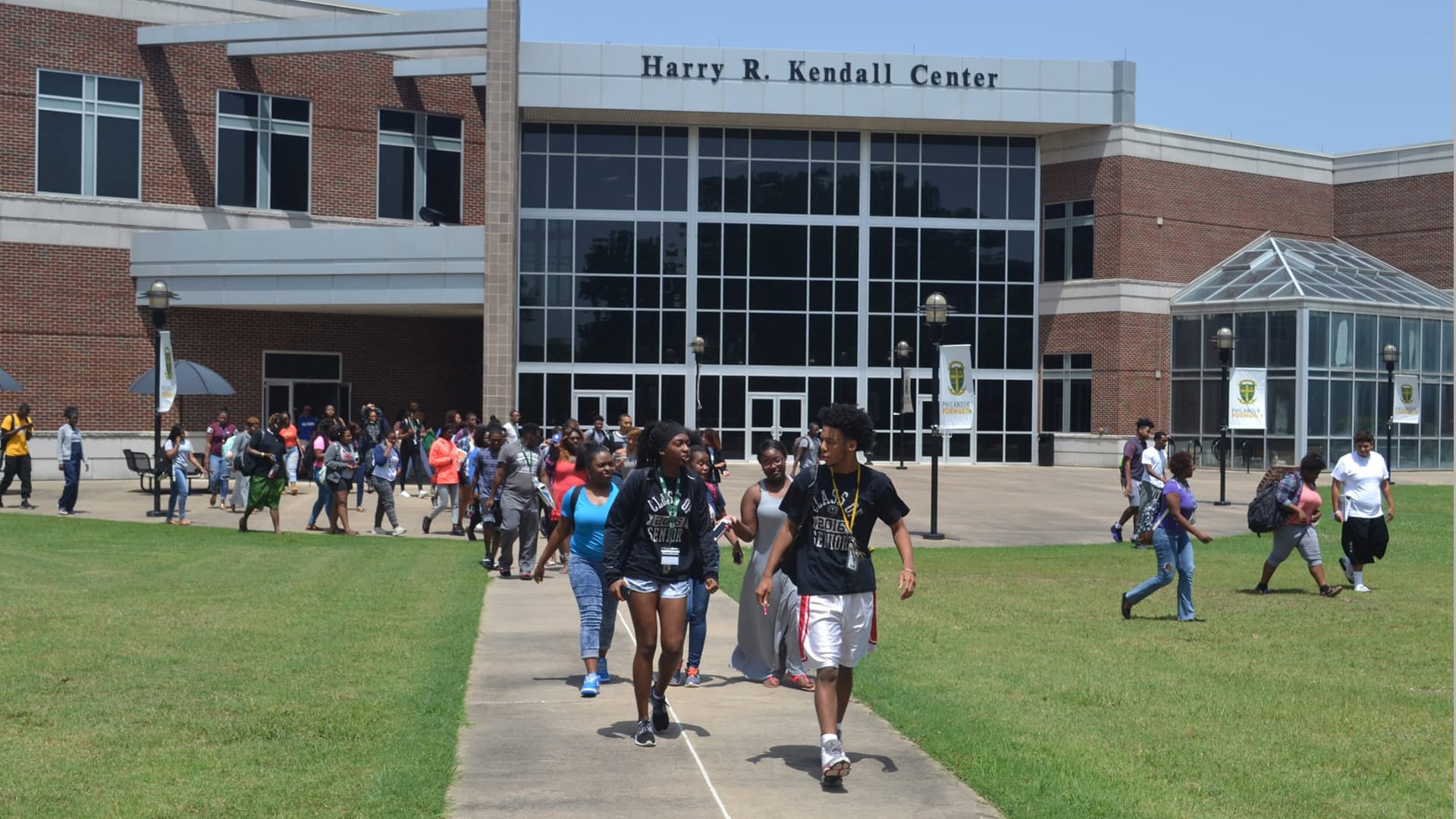
“We were able to finish out our nursing and health professions building with the support of The United Methodist Church and the Black College Fund. That positioned us for other major investments,” said President Dr. Maurice Gipson of Philander Smith University. (Photo courtesy of Philander Smith University)
By Wendy R. Cromwell
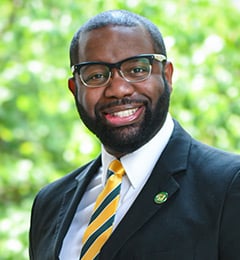
President Dr. Maurice Gipson of Philander Smith University
LITTLE ROCK, Ark. — For Philander Smith University President Dr. Maurice Gipson, support from The United Methodist Church, its General Board of Higher Education and Ministry (GBHEM), and the Black College Fund is essential. “I look at those funds as our version of state support,” Gipson said. “Without the support, there would be critical infrastructure activity we’d be unable to do.”
The Black College Fund provides annual support to 11 Historically Black Colleges and Universities (HBCUs) affiliated with the denomination. At Philander Smith, those dollars have helped turn dreams into reality. Gipson points to the completion of the university’s Nursing and Health Professions Building as a prime example.
“We were able to finish out our nursing and health professions building with the support of The United Methodist Church and the Black College Fund,” he said. “That positioned us for other major investments.”
The new facility allowed Philander Smith to launch a Bachelor of Science in nursing program aimed at increasing the number of culturally competent nurses in the region. That progress helped attract a major gift from philanthropist MacKenzie Scott, Gipson said, because it demonstrated the university’s commitment to public good.
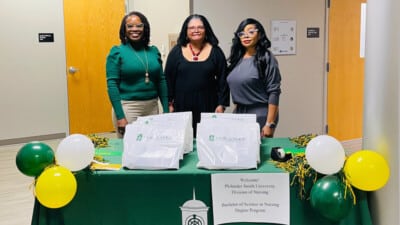
Philander Smith University nursing faculty prepare the next generation of culturally competent healthcare professionals through its nursing program. Support from The United Methodist Church and the Black College Fund helps strengthen Philander Smith’s health programs. (Photo courtesy of Philander Smith University)
Beyond large-scale projects, Gipson says even small contributions matter. He recalled receiving a $495 check from Village United Methodist Church in Hot Springs. “I was prouder of that $495 check than the $50,000 I got a week ago,” he said. “It means people care about us.”
Special 5% funds from the Black College Fund also provide “seed money” for innovation, Gipson said, enabling projects like faculty development and recruitment strategies. “It’s money that can be transformational,” he said.
For Gipson, the support is not just financial — it’s deeply personal. He keeps a quote from John Wesley on his computer: “Do all the good you can, by all the means you can.” “That should be blazed across every one of our schools,” he said.
With enrollment at 725 and a goal of 925 in three years, Gipson envisions Philander Smith as a leader in health professions, entrepreneurship, and technology. But he says the foundation for that future rests on continued partnership.
“Vitality is this: Could we exist without it? My answer would be a resounding no,” Gipson said. “We’re all connected through Christ. Even if you’ve never heard of Philander Smith, your support helps us provide a need to our communities.”
About the Black College Fund
The United Methodist Church expands access to quality education through the General Board of Higher Education and Ministry and the Black College Fund, supporting 11 affiliated Historically Black Colleges and Universities. As the largest church-based supporter of HBCUs, the fund provides essential resources for capital improvements, innovative programs, operating expenses, and initiatives that strengthen student success and institutional vitality.
Related Posts

I had one of the most beautiful experiences at an Albergue. On El Camino de Santiago there are many opportunities to stop. Albergues are inns, places where people can stop for the night and rest. Some albergues offer different amenities during the day. Some serve as cafes, places where you can have a bite to eat, use the restroom, and refill your water bottle. Most of them would charge a euro to use the restroom. Some would not allow you to use the facilities unless you were a customer.

Facing ongoing global instability, the boards of Higher Education and Ministry and Global Ministries invest in strengthening mission and ministry, prepare for organizational change, and affirm a vision of hope.
Methodism has a long history with the concept of perfection. In 18th-century England, perfection or perfectionism was understood the same way it is today. Perfection meant something without error or blemish. John and Charles Wesley, and the early leaders of the Methodist movement, understood perfection differently. In their practice, perfection was related to the Greek term teleio, which conveys maturity, wholeness, and completion.