United Methodist Higher Education Leaders Gather to Enhance Their Influence on the Church
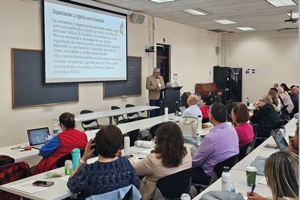
Representatives from United Methodist higher education institutions are gathering in Scottsdale, Arizona, Jan. 3-4 to discuss how the values of the church’s higher education ministry could inform the denomination’s mission. Attendees include university presidents and senior leaders from the National Association of Schools and Colleges of The United Methodist Church (NASCUMC).
This month’s gathering is the most highly attended in a decade, demonstrating the organization’s continuing influence. The General Board of Higher Education and Ministry (GBHEM), The United Methodist Church’s leadership development agency, initiated NASCUMC which has grown in its work to enhance United Methodist higher education as a ministry to the church and world.
“The history of the United Methodist movement has been defined by its deep commitments to education,” said Colette Pierce Burnette, president of NASCUMC and of Huston-Tillotson University in Austin, Texas. “At the same time, I expect that the future of this denomination will be equally defined by the relationship maintained between the church and its educational centers going forward. United Methodist colleges and universities are the most important gateway to the church for young adults.”
NASCUMC leaders will discuss the importance of maintaining that educational gateway for all students and its relevance to the 2019 Special Session of the General Conference.
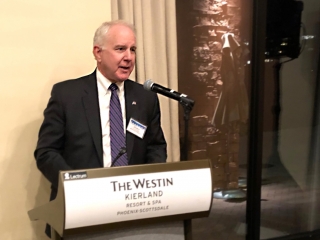
One of the co-facilitators of the Way Forward Commission, Bishop Sandra Steiner Ball, West Virginia Episcopal Area, will describe the various proposals that the upcoming General Conference will examine. Rev. Dr. Thomas Wolfe, president of Iliff School of Theology, in Denver, Colorado, will speak about the importance of the historical connection between the church and United Methodist schools, colleges and universities.
NASCUMC members will also address the association’s international relationships.
“The leaders of many Christian denominations speak about their church-related colleges, but ours is certainly a college-related church,” said Mark Hanshaw, associate general secretary for GBHEM’s Division of Higher Education. “The mission of United Methodism in the world has been defined by the church’s commitment to education and educational accessibility.”
NASCUMC is the second-largest denominationally-affiliated network of schools in the United States. It includes 119 member institutions. Among these institutions are 13 United Methodist seminaries, 11 historically black institutions and several private secondary schools. NASCUMC is supported by GBHEM’s Division of Higher Education.
About GBHEM: As the leadership development agency of The United Methodist Church, the General Board of Higher Education and Ministry’s mission is to build capacity for United Methodist lay and clergy leaders to discover, claim and flourish in Christ’s calling in their lives, by creating connections and providing resources to aid in recruitment, education, professional development and spiritual formation. Every elder, deacon and licensed local pastor benefits from our training and candidacy programs. Many young adults find help in clarifying their vocation and God’s call in their lives through our leadership and discernment programs. Follow us on Twitter and Facebook: @GBHEM.
Related Posts

When I talk to young people about peacemaking, I hear their cynicism. They’ve told me, “Why bother?” They seem to think no one is trying.

The proposal to unify four general agencies of The United Methodist Church — Discipleship Ministries, Global Ministries (GBGM), Higher Education and Ministry (GBHEM), and United Methodist Communications (UMCom) — to create a new connectional ministries agency has passed its next significant milestone.

I had one of the most beautiful experiences at an Albergue. On El Camino de Santiago there are many opportunities to stop. Albergues are inns, places where people can stop for the night and rest. Some albergues offer different amenities during the day. Some serve as cafes, places where you can have a bite to eat, use the restroom, and refill your water bottle. Most of them would charge a euro to use the restroom. Some would not allow you to use the facilities unless you were a customer.