MTSE Forum in Prague Focuses on Self-Care and Strategic Planning
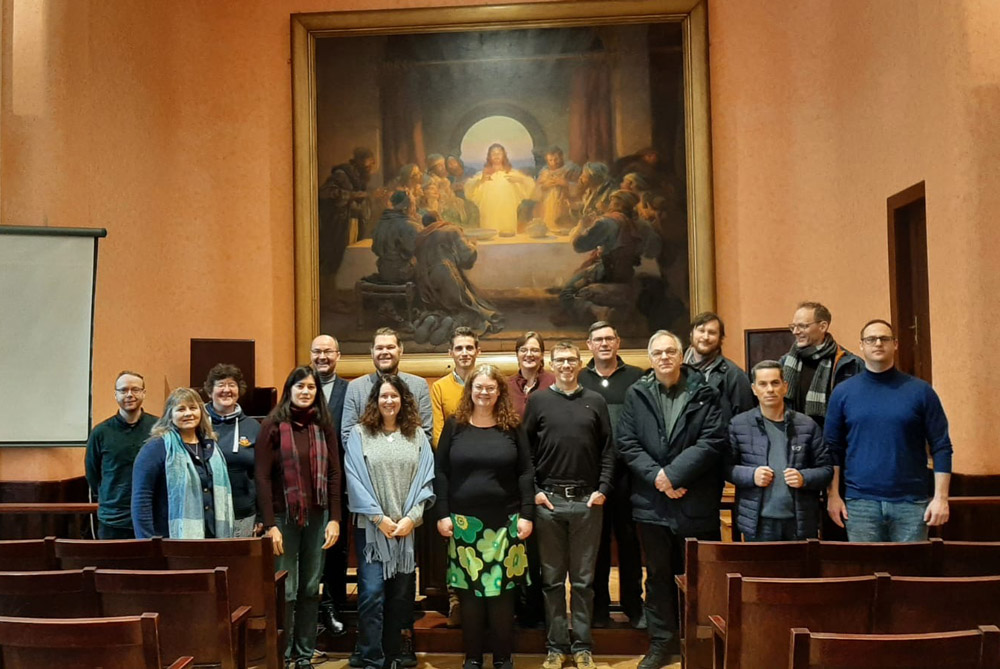
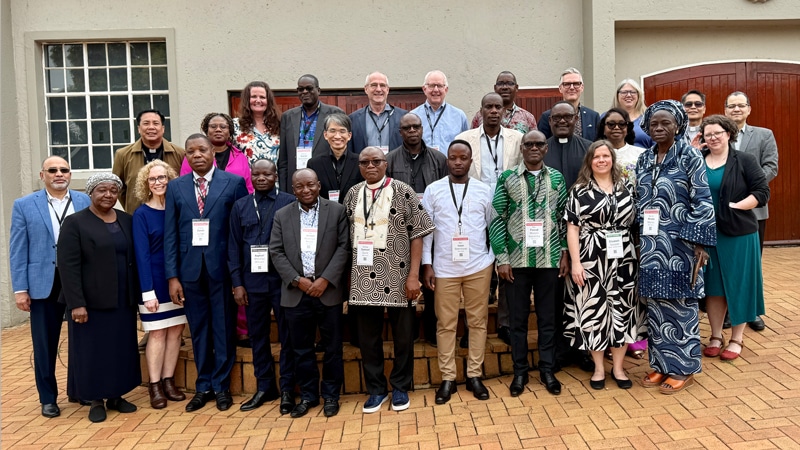
MTSE members and the e-academy students in the sanctuary of the church in the Czech Methodist Center in Prague.
The Methodist-Related Theological Schools of Europe (MTSE) met in Prague, February 3-7, for a forum on self-care and strategic planning. Led by outgoing President Hilde Marie Movafagh, rector of The United Methodist Theological School of Norway, representatives from nine institutions and the General Board of Higher Education and Ministry attended.
The forum served as a key opportunity for members to discuss the future direction of the association, which works to strengthen Methodist theological education. One of the major outcomes of the event was the election of a new president. Christof Voigt, Rector of Reutlingen School of Theology in Germany, will lead MTSE into its next phase.
The MTSE Forum coincided with the block week for the English-language students of the E-Academy in Europe. Facilitated by Rev. Dr. Erika Stalcup, E-Academy’s Academic Coordinator, the students participated in seminars before joining the broader MTSE group to explore the theme of self-care. The collaboration provided an invaluable opportunity for students and faculty to learn from one another, offering a space for support and mutual encouragement.
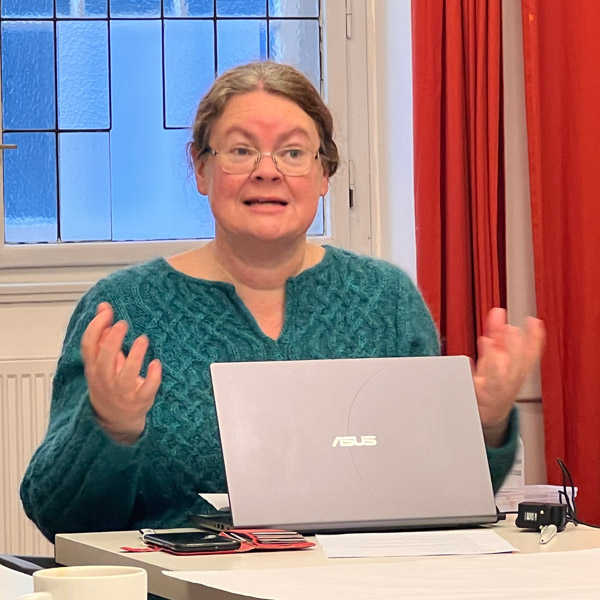
Hilde Marie (past president) leading the MTSE business meeting.
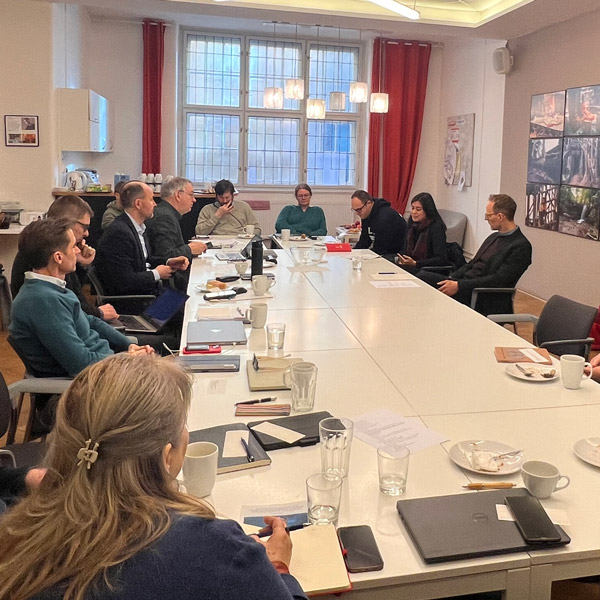
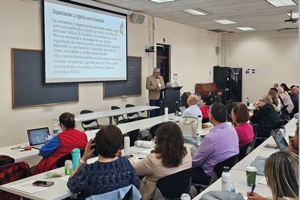
Erika Stalcup leading the two groups in a session on self-care
“I always say that meetings with my colleagues in MTSE are about relationships,” said Movafagh. “We lead educational institutions, and we share the Methodist connection. We have a lot to talk about when we meet.”
She emphasized that despite the challenges of disaffiliation within the larger church community, the MTSE group remains committed to fostering strong relationships. “In education, relationships across the disaffiliated larger connection are possible and good colleagues are still good colleagues,” she noted.
The week also featured conversations on academic life, such as how to engage students with reading assignments, the impact of artificial intelligence on exams, and how to secure funding for theological education.
“We experienced this again in Prague,” Movafagh said. “We are sincere in keeping the relations alive, and it’s a joy to see former students become outstanding church leaders.”
The event concluded with a meeting of the E-Academy Board of Directors and the ongoing commitment to building an even stronger, collaborative future for theological education in the region.
Related Posts

The Central Conference Theological Education Fund (CCTEF) awarded $992,594 in grants to support theological education across The United Methodist Church. During its spring 2026 meeting in Johannesburg, South Africa, commissioners reviewed $3.9 million in funding requests and made awards from a total allocation of $1.03 million. The final grant list was released in August.

Kathleen Norris writes about her students’ reflections on silence. Silence is sometimes scary. To hold silence is to let go of control. Sometimes we do not know what will follow after silence

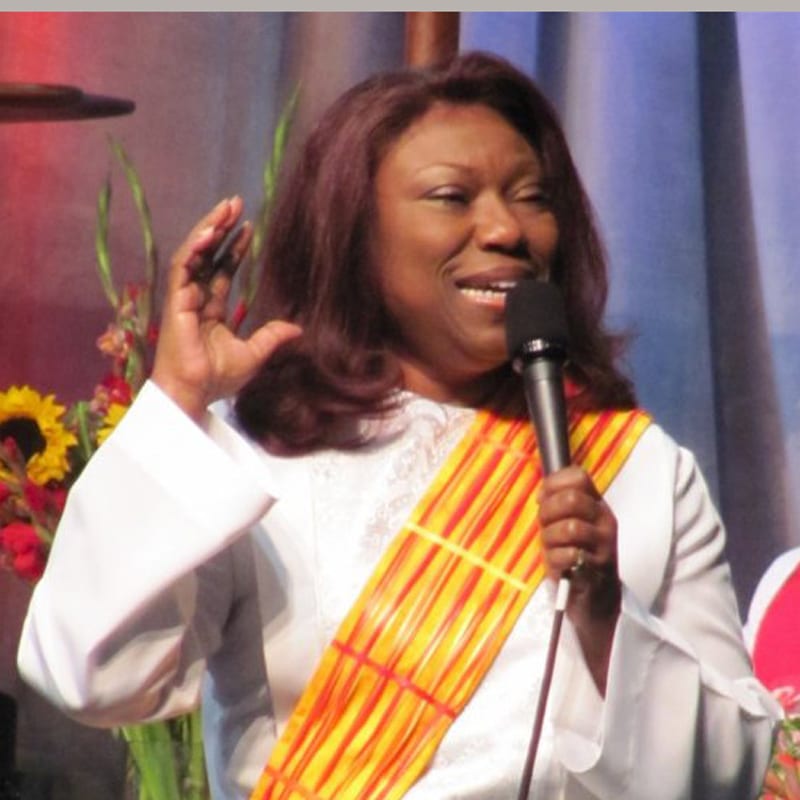
The Rev. Dr. Cynthia Wilson remembers the moment she recognized her call — even as she tried to resist it. Ordained in the first class of the Order of Deacons in The United Methodist Church, Wilson reflects on a ministry shaped by faith, music, and a deep commitment to service that has carried her across the globe.