GBHEM and AUMTS Convened Church Scholars to Discussion the Mission and Future of the Church
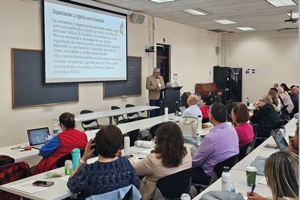
The General Board of Higher Education and Ministry (GBHEM) and the Association of United Methodist Theological Schools (AUMTS) co-hosted an academic theological colloquy, “Missio Dei and the United States: Toward a Faithful United Methodist Witness” November 12-15, 2017, in Boston, Massachusetts.
The colloquy brought together more than 40 United Methodist scholars and seven United Methodist bishops from across the U.S. to engage in constructive dialogue that will open new pathways in our understanding and faithful practice of the Missio Dei. The participants explored what the future of the church could look like from a missional perspective and Wesleyan heritage.
Initiated in service to the intellectual life of the church, the colloquies are intended to be a resource for the church. The colloquies tap into the scholarly and theological assets of The United Methodist Church for constructive and reflective conversation on topics impacting the church.
The next colloquy, focused on race, will be held November 2018 at Iliff School of Theology, Denver, Colorado.
“Our agency’s mission and focus is to support the leadership formation and development of The United Methodist Church, today and tomorrow,” said Rev. Dr. Kim Cape, general secretary, GBHEM. “The colloquies are tools to assist in living out our mission in service and provide meaningful reflections from and for the leaders of our church.
Two resources have been generated from the work of past colloquies, a study guide and book focused on church unity and human sexuality.
“The Unity of the Church and Human Sexuality: Toward a Faithful United Methodist Witness” is available on Cokebury.com and Amazon.com. The study guide is available at Cokesbury.com and Amazon.com as well as online in English, French, Korean, Spanish and Portuguese.
About GBHEM: As the leadership development agency of The United Methodist Church, the General Board of Higher Education and Ministry’s mission is to build capacity for United Methodist lay and clergy leaders to discover, claim and flourish in Christ’s calling in their lives, by creating connections and providing resources to aid in recruitment, education, professional development and spiritual formation. Every elder, deacon and licensed local pastor benefits from our training and candidacy programs. Many young adults find help in clarifying their vocation and God’s call in their lives through our leadership and discernment programs. Follow us on Twitter and Facebook: @GBHEM.
Related Posts

I had one of the most beautiful experiences at an Albergue. On El Camino de Santiago there are many opportunities to stop. Albergues are inns, places where people can stop for the night and rest. Some albergues offer different amenities during the day. Some serve as cafes, places where you can have a bite to eat, use the restroom, and refill your water bottle. Most of them would charge a euro to use the restroom. Some would not allow you to use the facilities unless you were a customer.

Facing ongoing global instability, the boards of Higher Education and Ministry and Global Ministries invest in strengthening mission and ministry, prepare for organizational change, and affirm a vision of hope.
Methodism has a long history with the concept of perfection. In 18th-century England, perfection or perfectionism was understood the same way it is today. Perfection meant something without error or blemish. John and Charles Wesley, and the early leaders of the Methodist movement, understood perfection differently. In their practice, perfection was related to the Greek term teleio, which conveys maturity, wholeness, and completion.