Shaping Leaders for a New Era
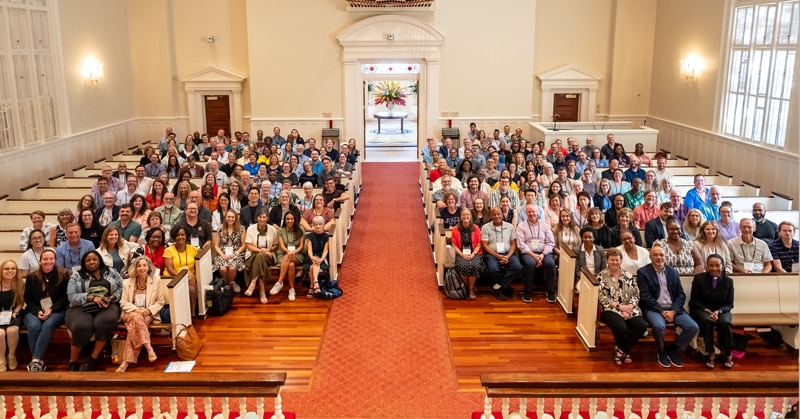
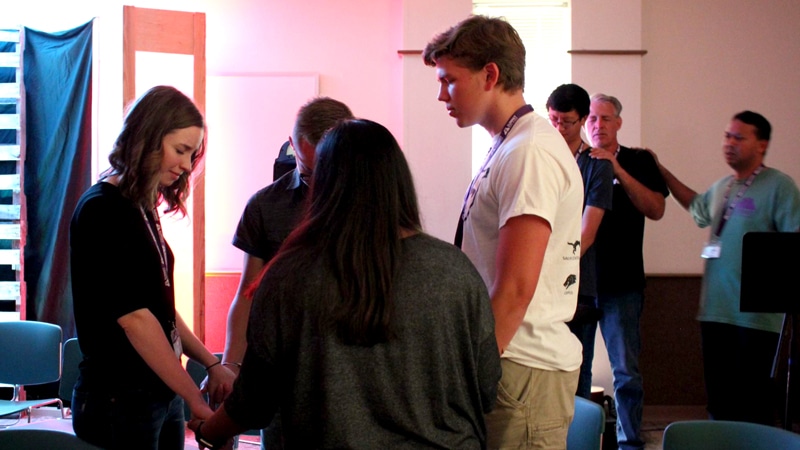
Participants at the Boards of Ordained Ministry Mid-Quadrennial Gathering assemble for a group photo after opening worship service on August 17 at the Peachtree Road United Methodist Church. Photo by Adam Bowers
Training Focuses on Clergy Formation and Well-Being at Mid-Quadrennial BOM Gathering
By Wendy R. Cromwell
Grounded in Jesus’ promise of abundant life in John 10, members of boards of ordained ministry met Aug. 17-19 for the Mid-Quadrennial Gathering to explore how clergy formation, spiritual development and well-being can equip the next generation of United Methodist leaders for faithful and sustainable ministry.
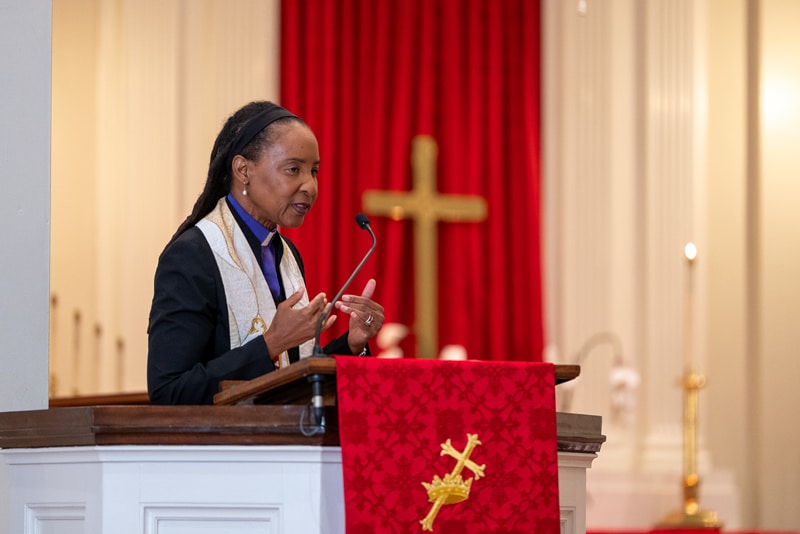
The church’s challenge is not simply recruiting more clergy but forming leaders with the spiritual depth, theological grounding, resilience, and adaptability needed to serve in a rapidly changing world, said Bishop Kennetha Bigham-Tsai during opening worship.
The Mid-Quadrennial Gathering equips members of the board of ordained ministry (BOM), the United Methodist body responsible for guiding, evaluating, and supporting candidates and clergy in the process of credentialing, licensing, commissioning, and ordination for ministry in the United States.
“The church of today needs leaders who can discern between what comes from God and what does not, and have courage to choose God, even in the face of resistance,” said Bigham-Tsai, vice president of the General Board of Higher Education and Ministry’s Board of Directors and chair of the Commission on the Study of Ministry.
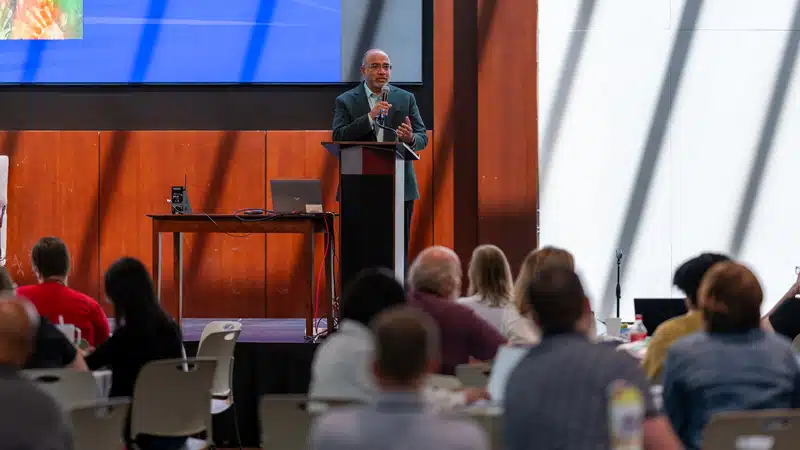
In opening remarks, Roland Fernandes, top executive of the general boards of Higher Education and Ministry and Global Ministries, outlined efforts to align theological education, formation practices, and support systems with the realities clergy face in ministry today.
Forming Clergy for a Changing World
“Our focus this week is centered on clergy well-being and the ways in which our leadership needs, formational practices, and ongoing support structures impact the many dimensions of clergy well-being,” Fernandes said.
Conversations throughout the gathering returned to the changing context of ministry and the qualities leaders will need to thrive. While acknowledging challenges such as political polarization, declining trust in institutions, and rapid technological change, participants emphasized that The United Methodist Church’s theology of grace, commitment to discipleship, and connectional system remain powerful strengths for forming faithful and resilient leaders.
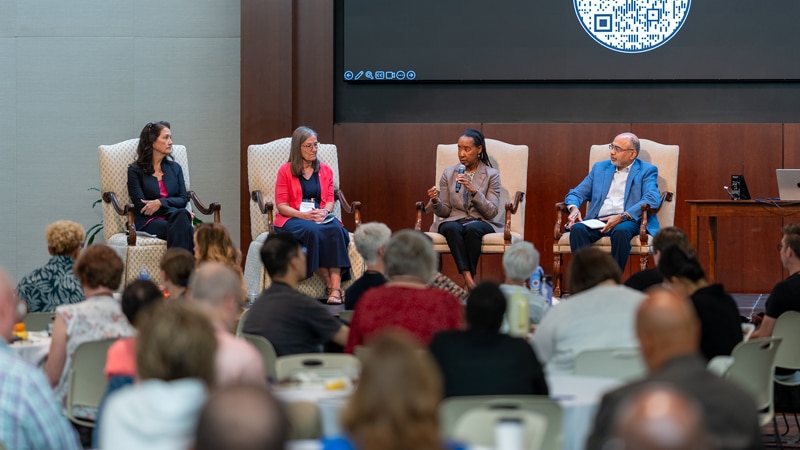
“I think The United Methodist Church’s biggest strength is connectionalism,” Fernandes said during a panel discussion on clergy formation.
Members of the Theological Education, Clergy Formation, and the Future of United Methodist Ministry Panel stressed that effective formation extends beyond academic preparation. Spiritual maturity, character development, theological reflection, and lived ministry experience were cited as essential qualities for future clergy. “You’ve got to be a spiritual leader first in the life of the church,” Steiner Ball said.
Clergy Well-Being
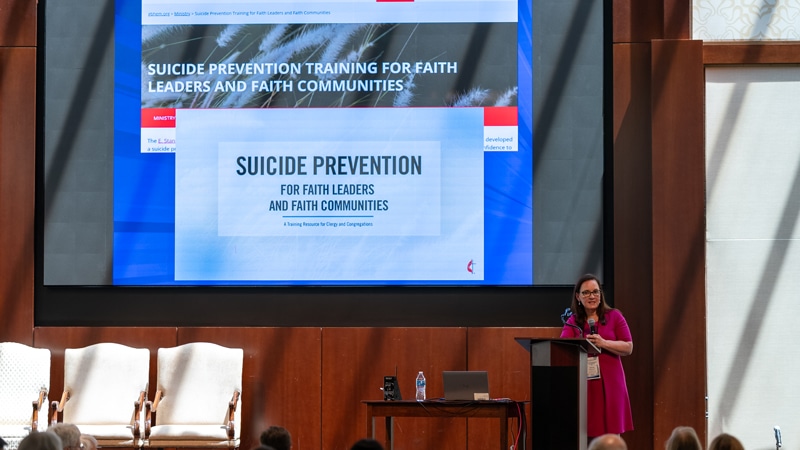
The focus on holistic formation also included attention to mental health and suicide prevention. Psychologist and suicide-prevention researcher, Dr. Melinda Moore, challenged participants to view suicide prevention as a ministry concern and an essential aspect of caring for both congregations and clergy.
Participants echoed that emphasis on well-being as a formational priority. North Carolina Conference representative Dawson Lane reflected that the church must move beyond cultivating “a culture of call” to also cultivate “a culture of sustaining our callings once we’re living into them, by making clergy wellbeing a key priority in our life together.”
Moore said faith leaders are uniquely positioned to recognize warning signs, reduce stigma, and connect people with support.
“Faith leaders are the best suicide prevention partners in the world. They just don’t know it, and they don’t know how to do it,” she said.
The session highlighted Suicide Prevention for Faith Leaders and Faith Communities, an online training resource developed through a collaboration involving Global Ministries, GBHEM, the E. Stanley Jones Foundation, and church leaders. Combining theological reflection, pastoral guidance, and evidence-based practices, the training equips clergy and congregations to support individuals experiencing suicidal thoughts and families affected by suicide.
Moore noted growing concerns about clergy mental health, reinforcing a recurring theme of the gathering: healthy ministry requires attention to emotional, mental, and spiritual well-being “Pastors, chaplains, and pastoral counselors minister at the intersection of theology and moral practice. They teach people to choose life,” Moore said.
Participants also emphasized that formation happens through experience as well as education. Bishops and seminary leaders called for expanded opportunities for mentoring, immersion experiences, leadership cohorts, and cross-cultural engagement.
Rev. Mitch Cochran of the Mississippi Conference said one takeaway was “the importance of telling our call story regularly to help others recognize their call to ministry.” He plans to encourage board members to share their own call stories with candidates as part of the formation process.
“Multiply, multiply, multiply the number of experiences that we give our pastors and people who are serving our churches,” Steiner Ball said.
Theological Education and Course of Study Updates
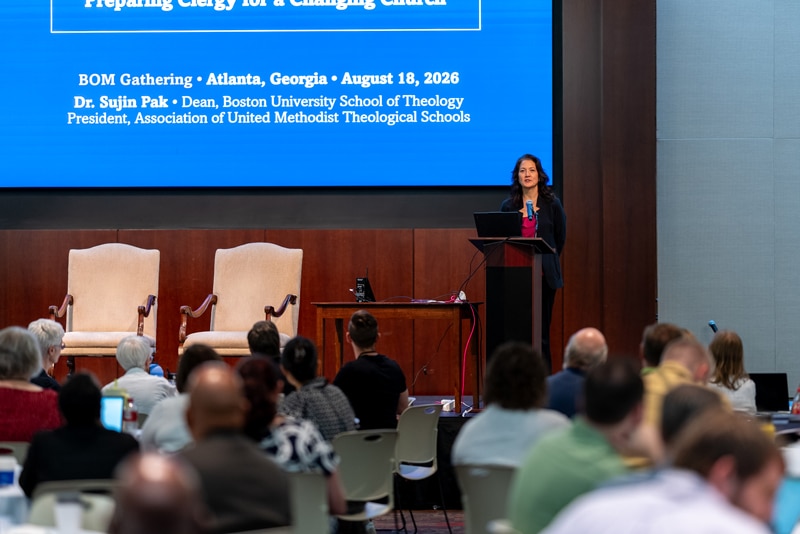
The conversation extended to theological education. Dr. G. Sujin Pak, dean of Boston University School of Theology, described a changing landscape as seminaries adapt to growing numbers of second-career students, working adults, and part-time learners. While educational models continue to evolve, she argued that formation must remain central.
“Theological education needs to attend not only to academic rigor and academic content, but also to the formation of their people,” Pak said.
Pak called for stronger partnerships among seminaries, local churches, and boards of ordained ministry, noting that no single institution can prepare clergy alone. “We need room for the new thing God’s doing, which might not always look like church as we think,” she said.
The commitment to holistic formation was also evident in discussions about the denomination’s redesigned Course of Study curriculum for licensed local pastors. Leaders highlighted renewed emphasis on personal and spiritual formation, theological grounding, cultural competency, and ministerial and public leadership.
Drawing on the work of the Commission on the Study of Ministry, leaders emphasized that ministry begins with baptism and discipleship, not credentials or status. “Ordination, like baptism, should be understood not as a graduation, but as an initiation into the way of life of the order,” Bigham-Tsai said.
She also encouraged conferences to create space for innovation and experimentation. “I consider that one of my jobs is to protect people who are trying to innovate, to protect people who are trying to do things differently, to celebrate innovation and to make room for failure. Preparing leaders for the future church, they agreed, requires more than educational pathways or credentialing processes. It requires spiritually grounded disciples committed to lifelong learning, courageous leadership, and nurturing communities of hope and healing.
“Love your people, love your people, love your people. Love Jesus, love Jesus, love Jesus. Ministry is about relationship,” Steiner Ball said.
Related Posts

The General Board of Higher Education and Ministry (GBHEM) continues its commitment to cultivate future church leaders through the Young Clergy Initiative (YCI) Vocational Discernment Grant Fund, a program designed to help individuals listen, discern, and respond to God's call to vocational ministry. Established by General Conference in 2012, the Young Clergy Initiative was created to increase the number of young clergy, under age 35, serving across United Methodist jurisdictions in the United States.
A new grant program, the Ministry Support Fund, to support clergy care, leadership development, and conference ministries was announced August 19 during the Boards of Ordained Ministry (BOM) Mid-Quadrennial Training held in Atlanta. The initiative was created by the General Board of Higher Education and Ministry and the General Board of Global Ministries to help annual conferences address emerging needs related to licensed and ordained ministry.

Grounded in Jesus' promise of abundant life in John 10, members of boards of ordained ministry met Aug. 17-19 for the Mid-Quadrennial Gathering to explore how clergy formation, spiritual development and well-being can equip the next generation of United Methodist leaders for faithful and sustainable ministry.