Reflections for Lent 2026: Hearing the Divine by Another Name
A Lenten Reflection Series
“This Lenten season, I invite us to loosen our grip on the need to capture, control, or fully comprehend the Divine. What if the most profound truth is that the Sacred is beyond our ability to fully name and too infinite to capture in syllables and words?” The Rev. Dr. Sharad Creasman
By Rev. Dr. Sharad Creasman, Brevard College
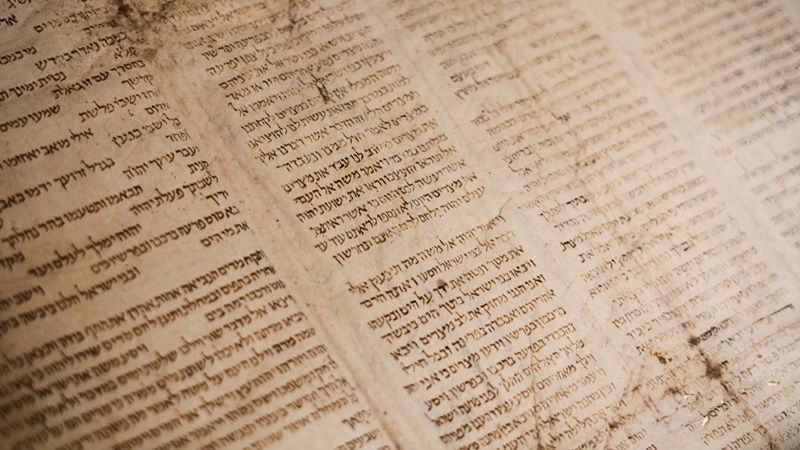
I sat quietly but attentively near the podium of a Jewish synagogue in the mountains of Western North Carolina, as Emily, a faithful member of the congregation, waited patiently for the Torah scroll to be unrolled and laid gently on the podium.
Once the scroll was in place, Emily stepped forward to read, and the sound of Hebrew wafted through the air like the smoke of a freshly lit incense stick. The words were rhythmic and ancient, yet alive. But when she reached four letters – yod, heh, vav, heh – she whispered the name Adonai instead, meaning “My Lord.”
An inquisitive onlooker asked, “Why did you pause while reading?”
Emily’s face beamed with excitement. “Adonai is a reverent substitute for the sacred name we do not pronounce or fully know. Sometimes we say Hashem, which means ‘the Name,’ but we recognize and accept that some things are just too vast and too holy to be captured in sounds or words.”
The Name
YHWH comes from the Hebrew verb “to be.” It highlights more than a name. It is existence itself. When Moses asked the name of the Eternal at the burning bush, he received an answer: “I AM WHO I AM.” Not a name, but a declaration: I am more than a name. I am presence itself.
An Invitation
This Lenten season, I invite us to loosen our grip on the need to capture, control, or fully comprehend the Divine. What if the most profound truth is that the Sacred is beyond our ability to fully name and too infinite to capture in syllables and words? This is not about secrecy; it is about humility. It’s about what we don’t fully know yet faithfully recognize. It’s about honoring the mystery in an age that demands detailed explanations.
As we walk through this Lenten season, may we learn to sit with the unknowing. May we resist the urge to reduce God to formulas and certainties. May we whisper our hopes, dreams, and prayers with trembling reverence, knowing that the One who hears us is both closer than our breath and vaster than the universe itself. May we trust that the Sacred dwells in the silence between syllables, in the pause before we speak, in the mystery we cannot name – and declares, “I AM WHO I AM.”
Prayer
Holy One, whose name is beyond our understanding, help us sit with mystery, let go of our need to know everything, and rest in your presence. Ase and Amen.
Related Posts

As of late September 2026, This Moment Matters has disbursed $38.6 million across 681 grants in the areas of agriculture and food security, education, health, migration, and peace.

A diverse group of church leaders will help guide worship and reflection at EXPLORATION 2026, Nov. 6-8 in Orlando, Florida. Participants will hear from the Rev. Lisa Yebuah, the Rev. Dr. Ashlee Alley Crawford, Bishop Carlo A. Rapanut, and the Rev. Albarka Abbo Wakili, whose ministries span church planting, discipleship, episcopal leadership, and global mission.
When I talk to young people about peacemaking, I hear their cynicism. They’ve told me, “Why bother?” They seem to think no one is trying.