Monday Reflections: Sojourner Truth
“Where did your Christ come from?”
— Sojourner Truth,
from her speech Ain’t I a Woman? delivered at the1851 Women’s Rights Convention
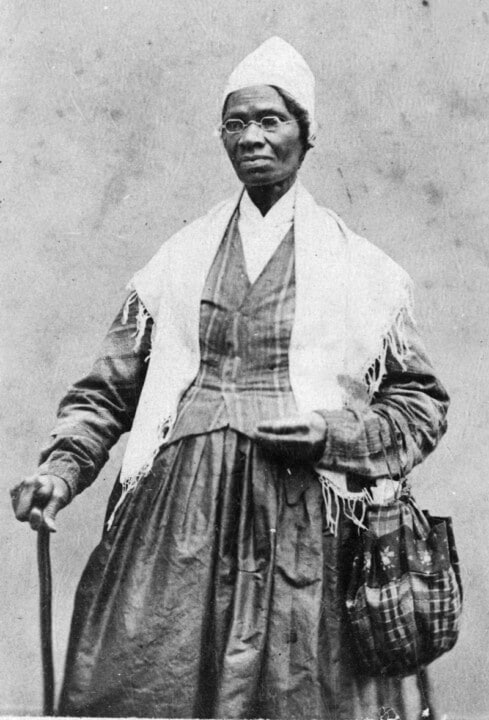
Too often, faith has served to justify genocide, wars, slavery, discrimination, and many other repulsive acts. Too often, we have used Christ to justify the evil that comes from our hearts. Photo courtesy of the National Archives
Isabella Baumfree was born into slavery in the United States. After nearly 30 years of abuse, being bought and sold, and forced into marriage, she decided to “walk away.” Her master had failed to honor his promise of setting her free after New York had passed the Anti-Slavery Act of 1827. She was tired. When asked, she insisted she did not run away but “walked away by daylight.”
Fifteen years later, Isabella became a Christian. She joined the African Methodist Episcopal Church, Zion. She became a preacher later in life. After the U.S. Civil War, she became a tireless advocate for the U.S. government to fulfill its promise to grant land to former slaves. She also became an avid advocate for women’s rights, rising to leadership in the suffragette movement. Often, her speeches will bring both themes together.
Shortly after her conversion, Isabella changed her name to Sojourner Truth.
Her most famous speech came in 1852 at the Women’s Rights Convention. From that speech, two specific phrases caught my attention. In the first one, she clearly states the power of womanhood,
If the first woman God ever made was strong enough to turn the world upside down all alone, these women together ought to be able to turn it back, and get it right side up again!
In that same breath, she makes an argument similar to the one St. Anselm made in the 12th century: God has made humans from the dirt and from a man, and those humans failed. Referring to Christ, God made the new humanity out of a woman, and it succeeded.
Then she reflects on Christ. When she was presented with arguments based on faith that would oppress women and former slaves alike, she asked, “Where did your Christ come from?” I think this is a great question that still resonates today. It makes me question myself, “How often has my faith served to justify my actions?” Too often, faith has served to justify genocide, wars, slavery, discrimination, and many other repulsive acts. Too often, we have used Christ to justify the evil that comes from our hearts.
Instead, faith in all the major world religions is meant to uplift humanity, care for those who are hurting the most, and work for a better future for all. In the Christian faith, this was Jesus’ message. Faith should not justify our actions but instead direct them.
Prayer
God of us all, during these times, lead me to be a servant of all. As you have shown me grace, mercy, and love, help me lead with grace, mercy, and love. Amen.

Rev. Eduardo Bousson
Senior Manager, Collegiate Ministries
The General Board of Higher Education and Ministry
The United Methodist Church
Related Posts

AUGUSTA, Ga. – Paine College is experiencing a renewal, thanks in part to the enduring support of The United Methodist Church’s Black College Fund, which leaders say has been essential to both the UM-related Historically Black College and University’s (HBCU) survival and mission.

Easter! In the Christian tradition, the season of Easter (or Eastertide) begins on Easter Sunday and runs for 50 days ending on the Sunday after Pentecost. For me, this is good news. For the 40 days of Lent, we have been in self-examination, often finding ways in which we fall short. Eastertide is also filled with self-reflection, but as a celebration of who we have become. Eastertide is a celebration of transformation.

Roland Fernandes addresses the Global Ministries and Higher Education and Ministry boards of directors in their spring meeting held in Nairobi, Kenya.