48th Women of Color Scholar Builds Community, Promotes Belonging
When Elyse Ambrose began studying for her master of divinity degree, she never imagined she would continue to a doctorate. But many of her academic advisors at the Interdenominational Theological Center noticed her passion for her work and encouraged her to take the next step.
“I took my assignments very seriously not only in terms of the academic journey, but seriously for my own theological development as a Christian and my own ethical development as a world citizen,” said Ambrose.
When she began to consider a Ph.D., two of her mentors included Dr. Jacquelyn Grant and Dr. Rosetta Ross, both of whom are closely involved with the Women of Color (WOC) Scholars Program – Grant as a founder and Ross as a participant. They encouraged Ambrose to apply to the WOC program once she began her doctoral studies at Drew University.
The WOC program offers mentoring and financial support to women of color who are pursuing a Ph.D. or Th.D. in the field of religious studies. It’s administered by the General Board of Higher Education and Ministry (GBHEM).
“Once I was accepted, I immediately got involved in the [WOC] program and reapplied every year. I loved the women that I worked with in the network as well as my cohort,” said Ambrose.
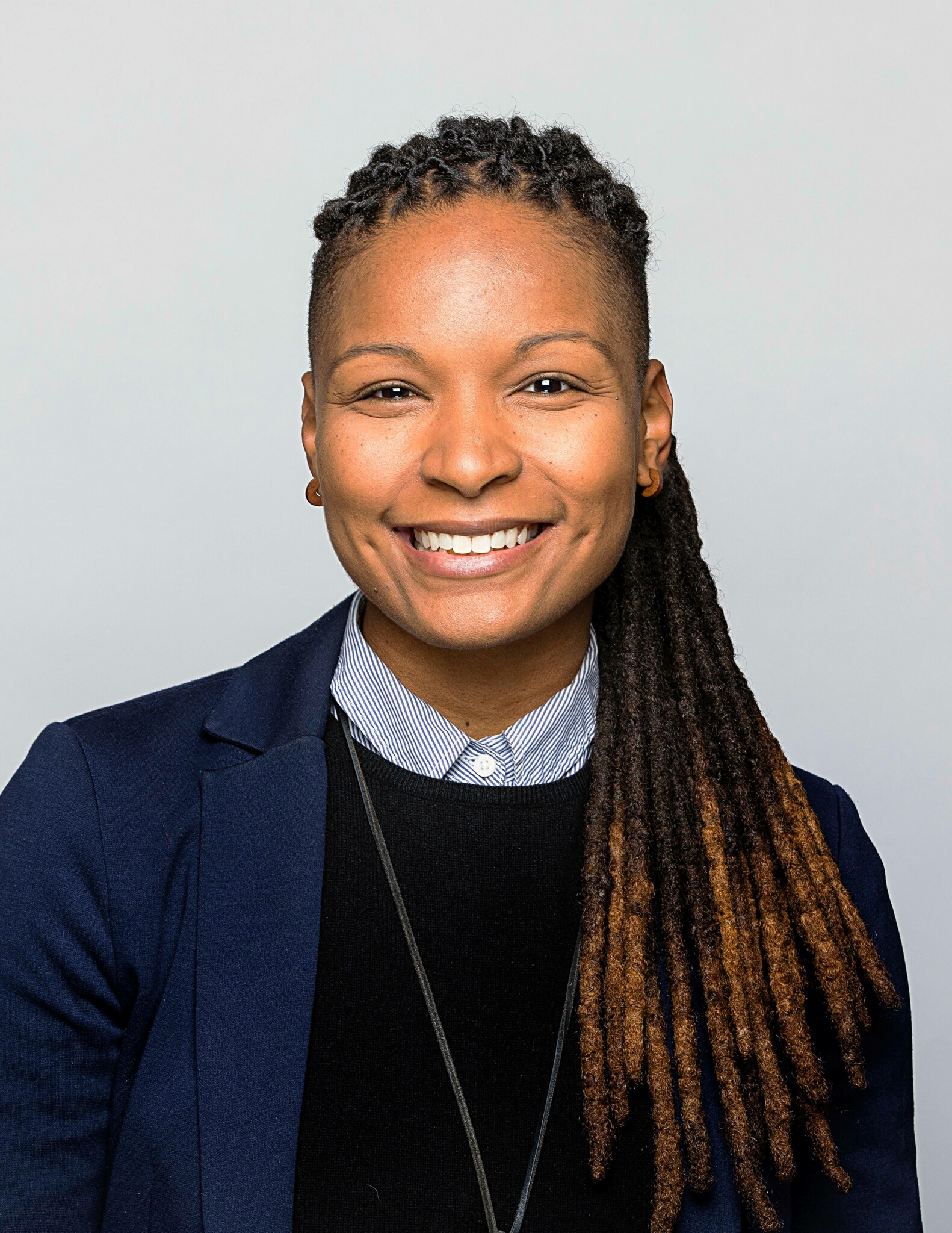
Elyse Ambrose is the 48th graduate of the Women of Color Scholars program.
A major part of the WOC program is not only mentoring from established Women of Color Scholars, but also a shared experience and support among women who are accepted at the same time. As Ambrose began to narrow her focus and prepare her dissertation, she felt that the WOC network was invaluable. Having experienced academics and peers she could easily turn to helped her navigate challenges in her field and prepare for success.
In August, Ambrose earned her Ph.D. from Drew University and became the 48th graduate in the Women of Color Scholars Program. The topic of her dissertation was, “Integrative Communality as Liberative Praxis of Christian Sexual Ethics: A Black Queer Ethic.”
“As a millennial WOC graduate, Elyse helps broaden the profile of the program to include what may now be called three generations of WOC Scholars. This reality adds to [The United Methodist Church’s] status as a leader among denominations in helping to diversify the landscape of religious and theological scholars. Elyse excels in using social media platforms to widen the reach and form of her socially engaged ministry,” said Ross who, in addition to her role in the WOC network, serves as a professor of religious studies for Spelman College in Atlanta.
Now that Ambrose has completed her degree, she is using her expertise to help others build welcoming and understanding community spaces. Her start-up company, phoeniXspark™ LLC, offers trainings and educational support for organizations seeking to practice justice through intersectional, expansive and integrative approaches to sexuality and gender.
“What I am really concentrating on now is the organizational training piece – particularly faith communities who need more language and training around how to address gender and sexuality in these spaces where we are in community with each other and we have to find ways to interact more justly and treat one another more justly,” said Ambrose.
She identified five communal values at the center of her dissertation and the trainings she offers through phoeniXspark™ LLC:
- Individual and collective becoming
- Communal belonging
- Goodness
- Shared thriving
- Inspirited body/embodied spirits
When describing her success in graduate school and in her early work with phoeniXspark™ LLC, Ambrose continually points back to the support network that’s been built through the WOC program.
“Knowing that there was a group of people that had invested in me and were there to support me was very meaningful,” she said. “I would encourage future scholars to embrace that and not underestimate the value of being connected to other Women of Color Scholars in the academic community.”
Would you like to learn more about how you can support the Women of Color Scholars Program? Read more and donate here.
About GBHEM: The General Board of Higher Education and Ministry’s mission is to build capacity for United Methodist lay and clergy leaders to discover, claim and flourish in Christ’s calling in their lives, by creating connections and providing resources to aid in recruitment, education, professional development and spiritual formation. Every elder, deacon and licensed local pastor benefits from our training and candidacy programs. Many young adults find help in clarifying their vocation and God’s call in their lives through our leadership and discernment programs. Follow us on Twitter and Facebook: @GBHEM.
Related Posts

Methodism has a long history with the concept of perfection. In 18th-century England, perfection or perfectionism was understood the same way it is today. Perfection meant something without error or blemish. John and Charles Wesley, and the early leaders of the Methodist movement, understood perfection differently. In their practice, perfection was related to the Greek term teleio, which conveys maturity, wholeness, and completion.
Sometimes, the road to Damascus passes through Breezewood, Pennsylvania. There at the intersection of Interstates 70 and 76, the Rev. Bruce Maxwell, a United Methodist deacon who serves as an endorsed chaplain at the travel plaza, cares for truckers, travelers, or anyone passing through.
The EXPLORATION discernment event is unlike any other event with its goal of helping people discern and not pushing them into ordained ministry or into a particular form of Christian service. EXPLORATION helps participants discern and be open to what God may be asking of them and how they are called to use their gifts and graces to make disciples of Jesus Christ for the transformation of the world.