Wealth of the Sun
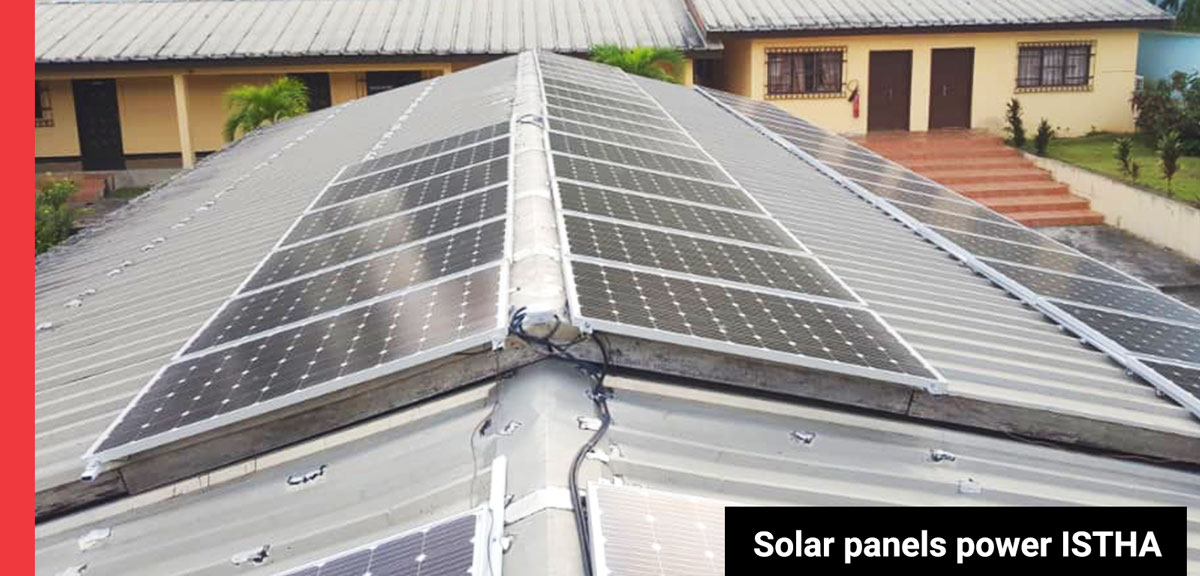
While many people have just begun to think about alternative power sources for their homes and businesses, the Higher Institute of Theology of Abadjin-Doumé (ISTHA) has depended on it since 2019, thanks to funding through the Central Conference Theological Education Fund (CCTEF).
Located in Abidjan, Côte d’Ivoire, ISTHA opened in 2002 within a then-sparsely inhabited community. Electricity was unstable and unaffordable for the new theological campus. Their new enrollees struggled with a lack of access to critical online resources, and classes experienced abrupt interruptions caused by power outages. Offering thorough theological education in such a setting held ISTHA back from reaching its goals of excellence.
In 2002, the first dean of ISTHA, Rev. Dr. Marcel Tata, welcomed the initial 30 students to the campus and witnessed their struggles with technology. “When the ISTHA opened its doors in 2002, the power supply problems were at the level of untimely interruptions of electrical energy due to recurring breakdowns. This caused serious disruptions in student research, as well as breakdowns that put some of our computer equipment out of use. In addition, the electricity bills were excessively high,” said Tata.
The forward-thinking vision of episcopal leadership and the communications leaders was a turning point. They began to envision using the “wealth of the sun” to shed new light on theological studies.
“It is always an excellent thing to take advantage of local wealth. Africa is the sun, and the sun is a great wealth,” said Bishop Benjamin Boni, Côte d’Ivoire Episcopal Area.
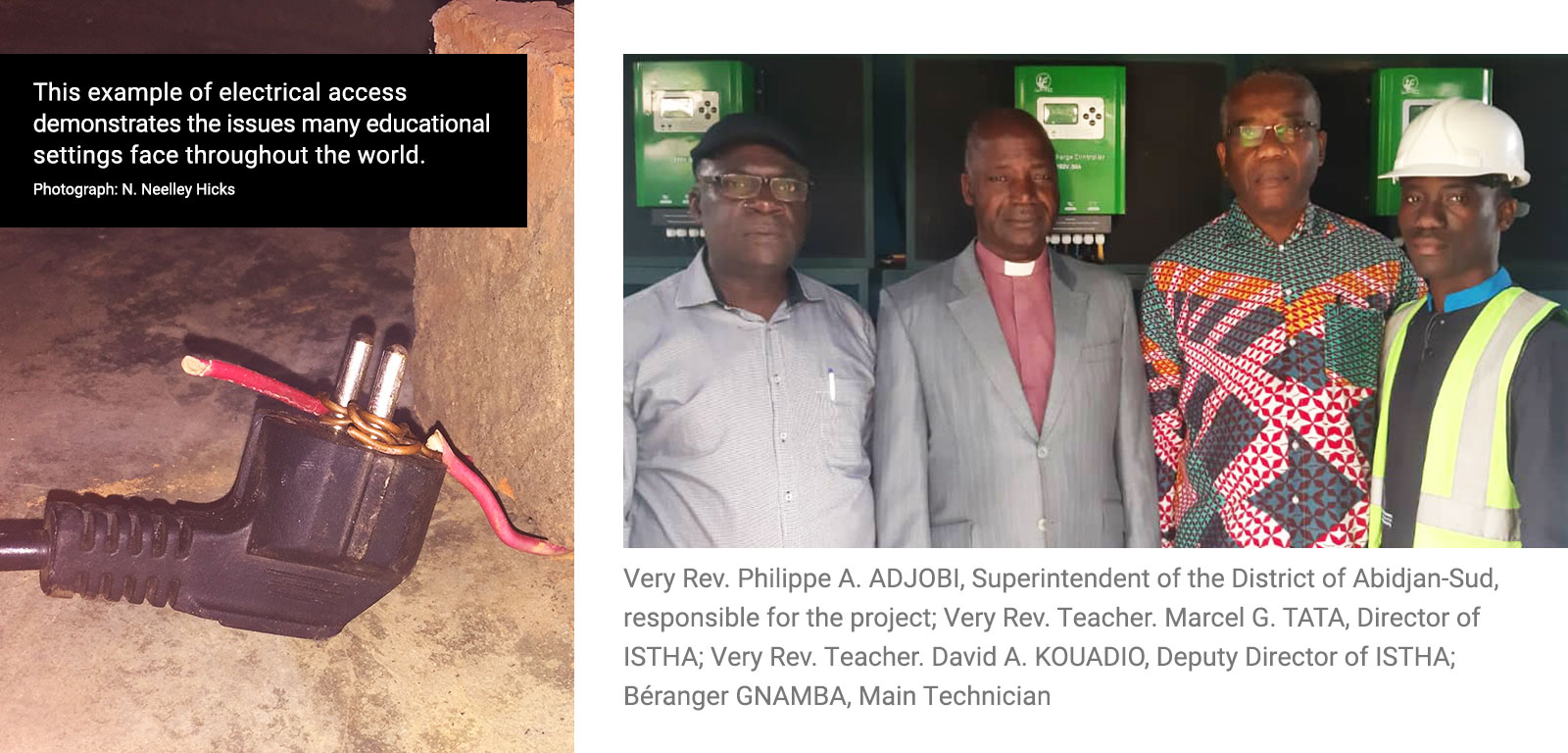
When CCTEF provided the funds needed for solar as the school’s alternative power source, the shift towards greater accessibility to theological education began. Since June 2019, ISTHA has been powered by solar energy. The system, which provides 90 KWH of energy produced and accumulated per day, includes 92 solar panels, 32 batteries, and other technologies that together bring more reliable power to the students, faculty, and visitors.
“Given that the students live in boarding school, the permanent supply of electricity due to solar energy was a real asset, a godsend, and contributed to the vital development of the entire Institute,” said Dr. Marcel Tata.
One of the students exclaimed, “Phew! Our suffering has come to an end with the advent of solar energy. Now we have access to documents on the internet and online library networks without sudden interruption.”
Currently, the system’s transformer is awaiting repair and is expected to cost approximately $6,000. This amount will be added to the 2024 episcopal area budget. Although the area has been developed into an urban setting, traditional power methods continue to be problematic and consume too much of the Institute’s budget.
These funds can be better spent on ISTHA’s mission, which is “to provide quality university education at the service of all Protestant and Evangelical Christianity in general and Methodism in particular, both nationally, sub-regionally (West African) and internationally.” ISTHA also seeks “to ensure the viability of an essentially South-South partnership for pastoral promotion, first within the whole of Côte d’Ivoire and then, if possible and, at their request, in other French-speaking African countries by setting up a sustainable infrastructure both in terms of the quality of the transfer of expertise and the excellence of the network of Ivorian trainers,” said Tata.
ISTHA celebrated its 20th anniversary in 2022, and while it has faced its challenges (including war, Ebola, Covid, etc.), it has continued to thrive by God’s grace and human ingenuity. ISTHA meets international standards for offering master’s and doctoral degrees and currently has 43 students enrolled.
Said Bishop Boni, “The ISTHA now benefits from a breath of fresh air through solar energy. Glory be to God, and thank you to the donors!”
The wealth of the sun is plentiful and, through God’s light, instills continued inspiration, wisdom and knowledge at ISTHA.
Related Posts

The University Senate of The United Methodist Church has approved a new Framework for United Methodist Formation, establishing a more comprehensive and flexible approach to preparing United Methodist candidates for ministry at approved non-United Methodist theological schools.

As of late September 2026, This Moment Matters has disbursed $38.6 million across 681 grants in the areas of agriculture and food security, education, health, migration, and peace.

A diverse group of church leaders will help guide worship and reflection at EXPLORATION 2026, Nov. 6-8 in Orlando, Florida. Participants will hear from the Rev. Lisa Yebuah, the Rev. Dr. Ashlee Alley Crawford, Bishop Carlo A. Rapanut, and the Rev. Albarka Abbo Wakili, whose ministries span church planting, discipleship, episcopal leadership, and global mission.